What Happens During Factory Acceptance Testing (FAT) Stages 1-2
During Factory Acceptance Testing (FAT), Laub\Hunt Packaging Systems runs your filler through a structured, checklist‑driven trial in their plant—verifying lubrication, mechanical alignment, leak‑tight product paths, safety functions, long‑run performance, and documentation—so issues are found and fixed before the machine ever ships.
Why FAT Matters Before Your Filler Ships
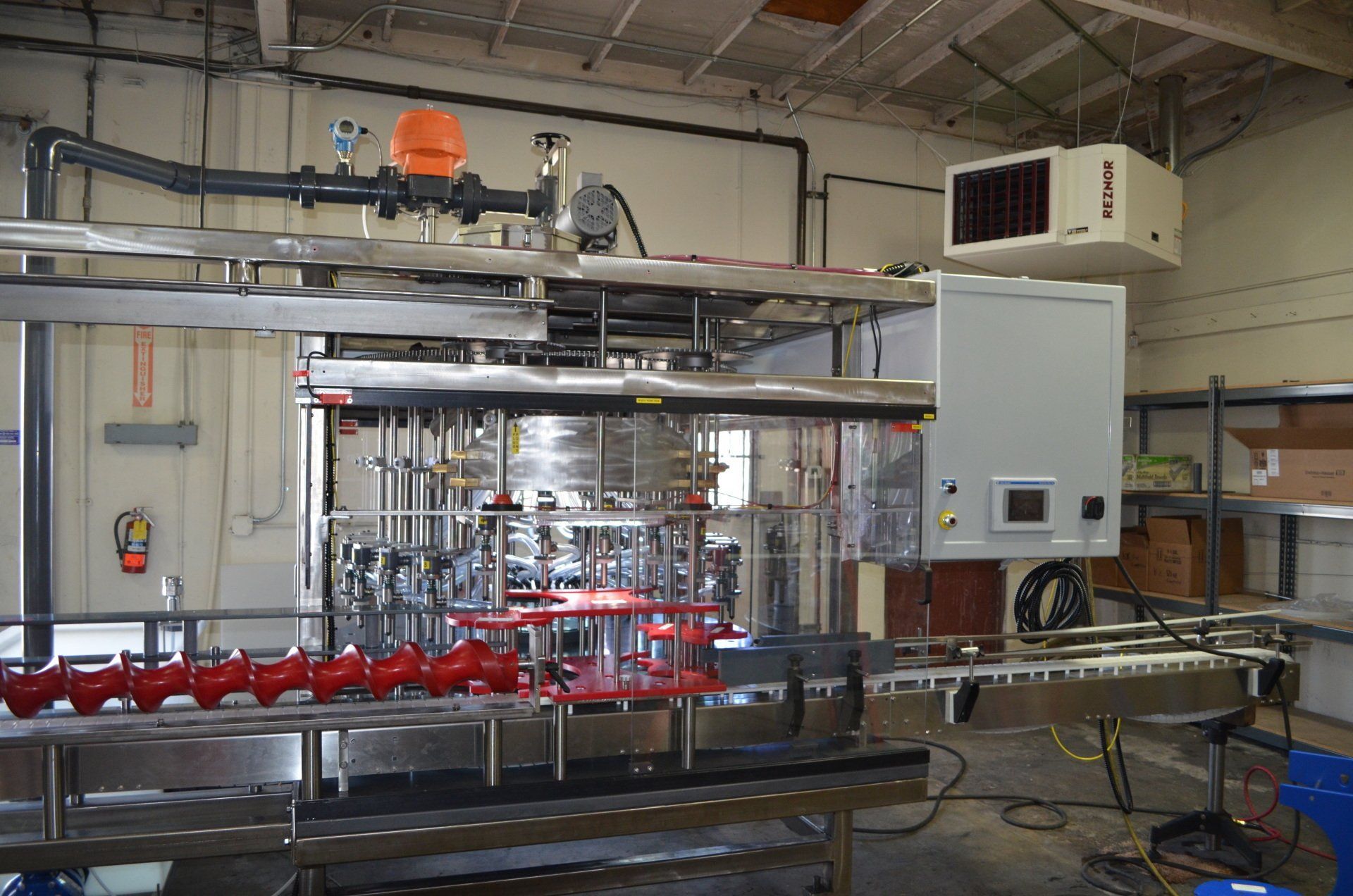
Factory Acceptance Testing is the last major quality gate your filling machine passes before it leaves Laub\Hunt’s facility. It is where we simulate how your machine will run in your plant—under controlled conditions, using water and your containers—to verify performance, safety, and build quality against the agreed specifications.
Across the liquid‑filling industry, FAT is recognized as a critical step for complex equipment: it catches issues early, avoids surprises during installation, and gives both the equipment manufacturer and customer a shared performance baseline. Laub\Hunt’s FAT process builds on a detailed filler checklist and validation expectations, especially for demanding applications such as bleach, pool / spa, and food and beverage.
Stage 1: Pre‑FAT Preparation and Test Plan
Turning your Order into a Test Protocol
Before FAT begins, Laub\Hunt prepares a test protocol that translates your purchase order and technical specifications into concrete checks and acceptance criteria. This protocol defines:
● Scope: Machine model, filling technology (gravity, pressure, MAGFlow, etc.), container sizes, and products (bleach/detergent or food).
● Tests to be performed: Lubrication verification, dry and wet runs, leak checks, performance trials, safety checks, and simulated operation.
● Acceptance criteria: Speeds, fill accuracy with water, leak‑tightness, and functional behavior (e.g., interlocks and float switches).
Laub\Hunt follows this process, creating formal FAT and pre‑FAT documents that both parties review and approve before testing begins. Laub\Hunt’s protocol is anchored in its detailed filler checklist so that every critical point is tested or inspected, and checked off.
Test Media, Bottles, and Customer Involvement
To simulate actual conditions, Laub\Hunt typically uses water as the filling medium and, where possible, your actual bottles and closures. This allows us to validate the mechanical handling, fill levels, and changeovers for the containers you will actually run in production.
We strongly encourage customer participation during the FAT—either on‑site or via video—so your team can observe the machine, ask questions, and verify the results. Laub\Hunt supports this collaborative model and structures the FAT so that you can observe key stages if you choose.
Stage 2: Lubrication and Mechanical Readiness Checks
Lubrication Checklist: Protecting Every Moving Part
Laub\Hunt’s FAT begins with a systematic lubrication review to ensure every critical bearing and sliding surface has the correct lubricant before extended operation. This includes:
● Filling main shaft bearings.
● Greasing star hubs, cam sliders, threaded adjusters, ball bearings, star shafts and cam screws, and cam followers.
● Lubricating valves, gearboxes (including conveyor gearboxes), and all zerk fittings (top of gearbox, bottom of rotating seals, top star shaft bearings).
● Confirming the air oiler is filled and that air cylinders are assembled with internal grease.
● Verifying lubrication on brass wearing surfaces on sliders.
These best practices employ proper lubrication as the foundation for both accurate motion and long‑term reliability. Laub\Hunt formalizes them via a checklist so that no lubrication point is overlooked.
Mechanical Integrity and Alignment
Next, technicians confirm the machine is assembled correctly and mechanically sound. Key checks include:
● Ensuring all nuts, bolts, screws, and zerk fittings are installed and tightened.
● Checking that there is no paint on threads or leveling‑screw surfaces, which would interfere with adjustment.
● Verifying that bumpable corners are ground to a minimum 1/8‑inch radius to avoid sharp edges.
●
Confirming all cam followers and shafts move freely without binding.
They also visually align:
● Star shafts, cam support shafts, and slider shafts in two dimensions, holding total variation within the specified limits.
● Bowl and O‑ring concentricity and alignment.
● Donut plate level within approximately ±1/16 inch, with centering bolts and lock nuts set.
FAT guidelines call for thorough mechanical and geometric inspections before dynamic testing, as misalignment is a major cause of jams, wear, and off‑spec fills.
Contact us for more information. Check back soon for stages 3 - 4 and stages 5 – 7.