Material Compatibility: Choosing Equipment That Lasts
Material Compatibility: Choosing Equipment That Lasts
Material compatibility is one of the most important factors in equipment performance. The wrong choice can lead to premature wear, more maintenance, and unnecessary downtime. At Laub\Hunt Packaging Systems, we consider product chemistry, cleaning requirements, and operating conditions early in the design process so our customers receive equipment with long-term reliability.
Why Material Choice Matters
Every product places different demands on a
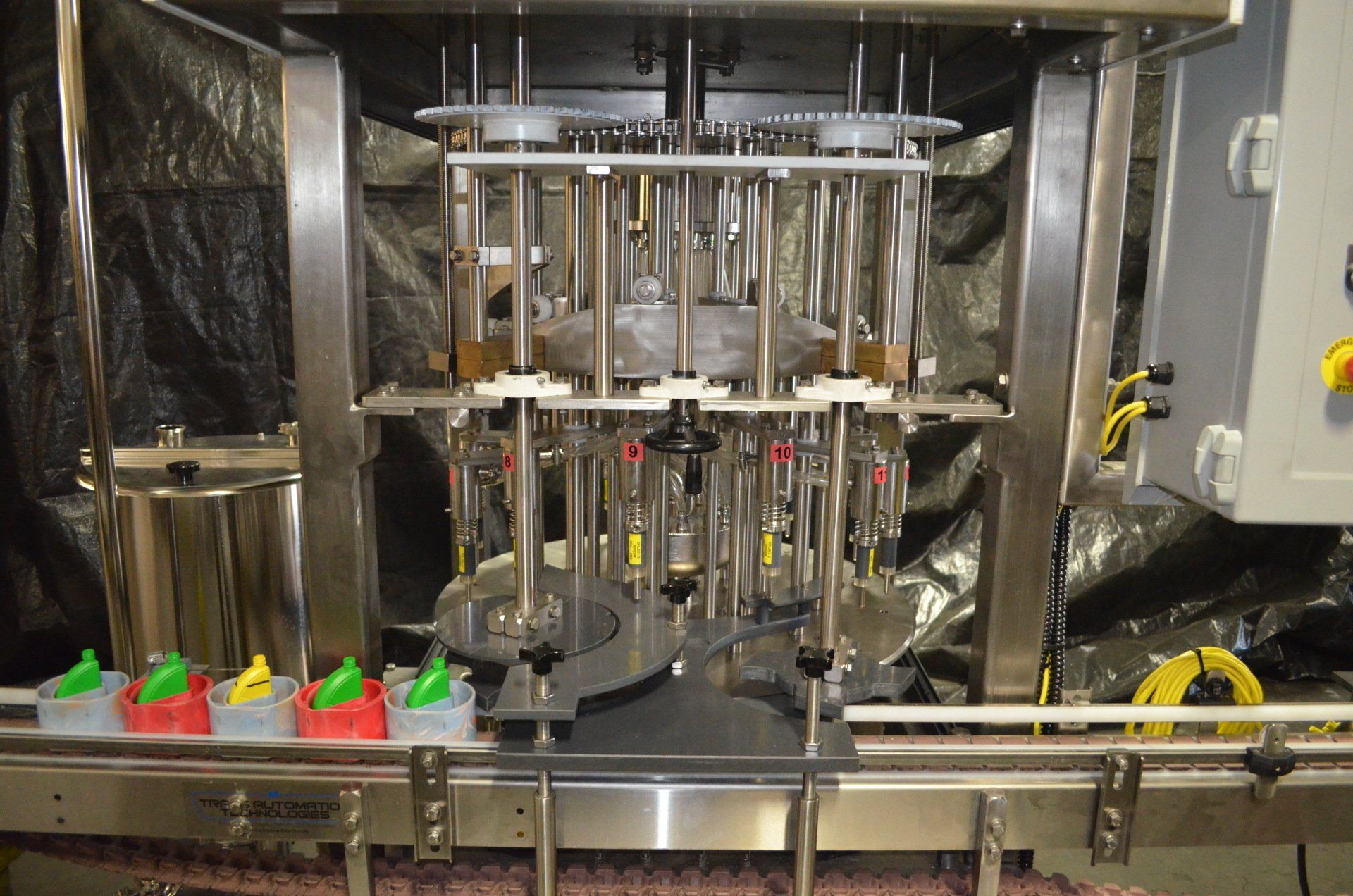
filling system. Corrosive formulations, abrasive materials, temperature variation, and washdown exposure all affect how equipment performs over time. Stainless steel is the choice for many applications because of its durability and cleanability, while titanium, PVC, and specialty materials can be appropriate in more demanding environments.
The best material is the one that performs well for all needed applications, for the full life of the production line. We view material selection as part of the design strategy for reliability and durability, not just a specification detail. When the equipment is built for the product and the plant environment, you see consistent performance and fewer maintenance disruptions.
Where Stainless Steel Fits
Stainless steel remains a common choice across liquid filling applications because it offers a strong balance of strength, hygiene, and service life. For many food and beverage, personal care, and household product lines, it provides the durability and cleanability needed for day-to-day production. It also supports sanitation practices that matter in regulated environments.
At the same time, stainless steel is not the answer for every contact point or operating condition. Product chemistry, cleaning agents, and process temperatures all influence how the equipment will hold up. We evaluate those conditions carefully so the line is designed for the application, not just the product category.
When Specialty Materials are Appropriate
Some applications call for materials beyond standard stainless steel. Titanium may be appropriate where corrosion resistance is critical, while PVC or other specialty polymers can be useful in selected chemical filling environments. The key is understanding where the material will be used, what it will contact, and how often the system will be cleaned or exposed to harsh conditions.
We encourage engineers and plant managers to look at the full operating environment before making a final decision. A material that performs well in one part of the line may not be the best choice elsewhere. Our engineering approach is to match each component to the conditions it will face, with a focus on service life and dependable operation.
Maintenance and Uptime
Material compatibility has a direct effect on maintenance. When components are exposed to incompatible products or cleaning agents, wear can develop faster and repairs become more frequent. Over time, that leads to more interruptions and less predictable production output.
A well-matched material package can reduce those risks. It can support easier cleaning, better corrosion resistance, and longer intervals between parts replacement. For plant teams, that creates a more stable operating environment and a more manageable maintenance schedule.
Supporting Product Integrity
In food, beverage, personal care, and chemical applications, material choice also supports product integrity. Equipment surfaces and contact materials must perform consistently while helping protect the quality of the product being run. That’s why we place a strong emphasis on cleanability, compatibility, and durability.
Regulatory requirements and customer standards continue to make this area more important. Plants that take material selection seriously are better positioned to maintain quality, reduce risk, and keep production moving. We see material compatibility as a practical decision with clear operational benefits.
Our Approach
At Laub\Hunt, we design liquid filling systems with these considerations in mind from the outset. Our goal is to help customers choose equipment that fits the product, the process, and the production line. That approach supports reliability, extends equipment life, and helps reduce unplanned downtime.
We work with customers in the bleach, pool / spa, household products, industrial chemicals, food and beverage, personal care, and automotive industries. In every case, our focus is on building systems that are durable, maintainable, and appropriate for the job.