How Laub\Hunt Packaging Systems Builds a Liquid Filling Machine FAQs - Part 3
August 17, 2026
How Laub\Hunt Packaging Systems Builds a Liquid Filling Machine FAQs - Part 3
Frequently Asked Questions
- What is a liquid filling machine?
A liquid filling machine is equipment that measures and dispenses a specific amount of liquid into a plastic, glass, or metal container. Laub\Hunt builds them for products ranging from water and beverages to bleach, oils, lotions, and industrial chemicals. - How does a liquid filling machine work?
It uses a fill method such as gravity, overflow, piston, or volumetric dosing to move liquid into containers. Sensors, pumps, valves, and controls help ensure each container is filled with the correct amount of product. - What are the main types of liquid filling machines?
The most common types are gravity fillers, pressure fillers, overflow fillers, piston fillers, and volumetric fillers. The best type depends on the product’s thickness, foaming tendency, and required accuracy. - Why does product type matter so much?
Different liquids behave very differently during filling. Thin liquids, thick creams, corrosive chemicals, and foamy beverages each require different machine designs and materials. - What materials are used to build these machines?
Laub\Hunt uses stainless steel, corrosion-resistant plastics, and specialized seals and tubing. The exact materials depend on whether the machine handles food, personal care products, or harsh chemicals. - How does Laub\Hunt ensure accuracy?
They calibrate the filling system, test the nozzles, and use controls that manage fill time, volume, or fill level. Factory testing helps confirm that the machine fills consistently across many cycles. - Can one machine handle multiple products?
Yes, but usually only if it is designed for flexibility. Modular components, adjustable settings, and interchangeable parts make it easier to switch between products and container sizes. - What safety features are important?
Important features include guarding, emergency stops, drip control, corrosion resistance, and explosion-proof options when needed. Safety is especially important for bleach, chemicals, and other corrosive liquids. - Why is sanitation important in liquid filling equipment?
Sanitation helps prevent contamination and product spoilage. It is especially critical for food, beverage, and personal care applications where cleanliness affects quality and compliance to customers’ specifications. - What should buyers look for in a liquid filling machine?
Buyers should look for accuracy, product compatibility, sanitation, durability, automation level, and serviceability. The best machine is the one that matches the liquid, the container, and the production goal.
Contact Laub/Hunt for more information and look at Parts 1 and Part 2 of this blog series.

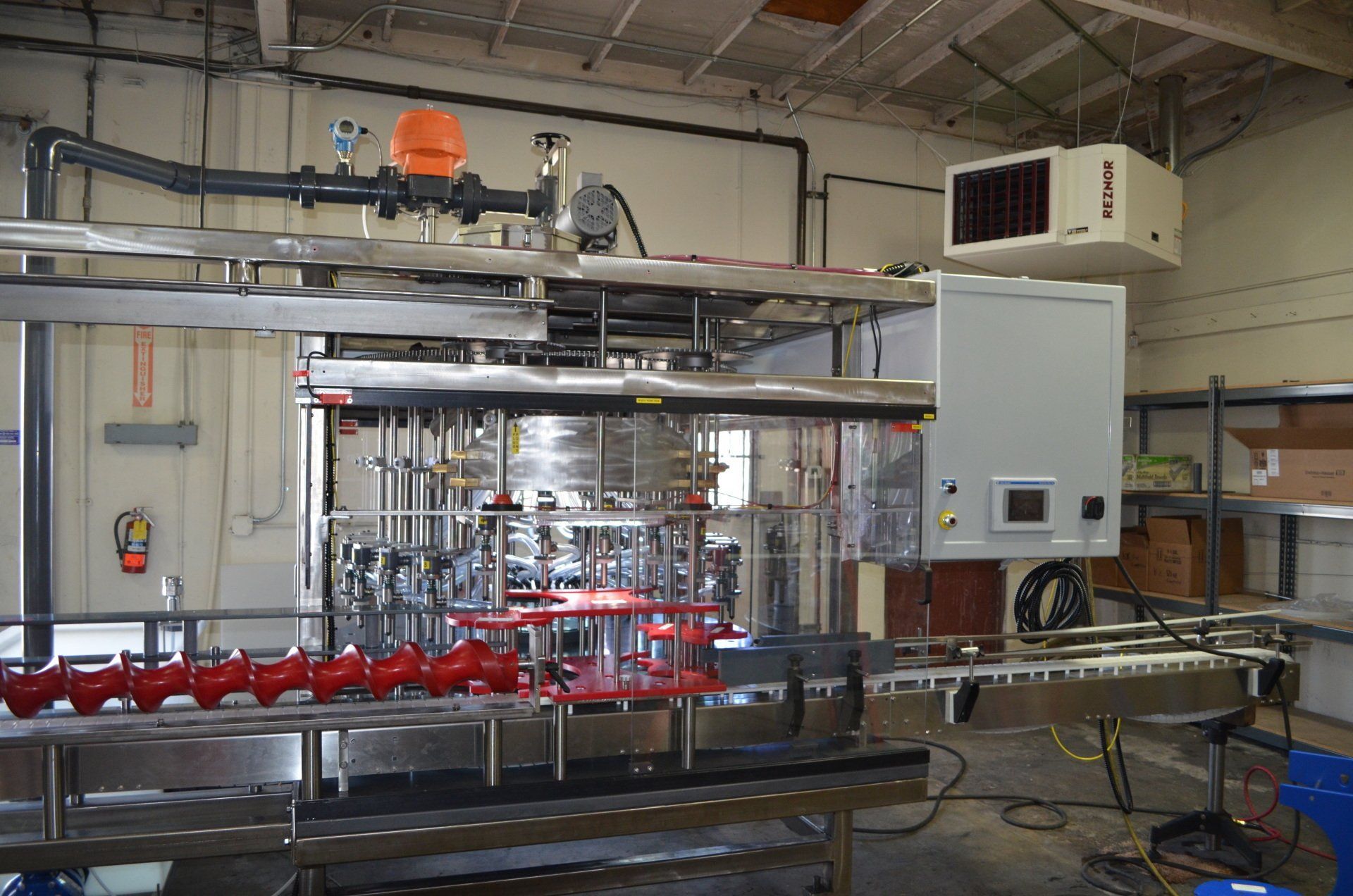
What Happens During Factory Acceptance Testing (FAT)Stages 3 - 4 Stage 3: Dry Functional Testing Air and Control System Checks With the mechanicals validated and lubricated, Laub\Hunt conducts dry functional tests (i.e., no product yet) to confirm pneumatic and control behavior. This includes: ● Checking the air filter by running air through water to verify proper exhaust of air and any entrained moisture. ● Wiring and testing up‑and‑down solenoids, confirming the correct hoses and motions, and ensuring there are no wiring or plumbing errors. ● Setting pressure regulators for plungers and other actuators. ● Verifying float switch travel—typically at least 4 inches between on and off positions—and ensuring switches reliably trigger overflow pumps when specified. These steps represent best practices where PLC inputs/outputs, actuators, and interlocks are checked before any wet testing. Laub\Hunt’s checklist embeds these tasks in a structured, sign‑off format. Valve and Hardware Verification Still in the dry phase, technicians verify: ● Presence and condition of all valve components: blocks, washers, O‑rings, tips, and screws, with no missing parts and all fasteners snug. ● Adjustability of valves across the full outage range: clearing the bottle top, reaching the lowest fill level, and beyond. Other FAT protocols require similar checks to ensure valves and heads are complete and adjustable before any performance measurements are made. Laub\Hunt’s detailed valve checklist minimizes the risk of assembly omissions that could create leaks or inaccurate fills. Stage 4: Wet Test and Leak‑Tightness Water‑based Wet Test The core of FAT is the wet test, where the filler is run with water to verify leak‑tightness and system behavior under realistic hydraulic conditions. Laub\Hunt technicians: ● Check for leaks at valves, hose gaskets, manifolds, and piping to any vacuum pumps. ● Inspect rotating seals by deliberately stressing them side‑to‑side to see if leakage occurs. ● Verify that O‑rings at switches are lubricated and not leaking, and that Permatex or similar thread sealant is applied on specified switch threads. Laub\Hunt prioritizes leak tests, emphasizing the need to verify seals, connections, and wetted components before shipping. Laub\Hunt’s process ensures the entire liquid path is sealed and stable. Functional checks with water and bottles Simultaneously, the team verifies system functions under wet conditions: ● Confirming float switches control overflow pumps correctly. ● Running bottles through the filler to test stars and guides in real operation. ● Checking that valves reach and maintain target levels at different settings and that the full range of fill‑level adjustment is available. ● Ensuring the cam for “puffing” or venting seals properly on the upper tip O‑ring before being withdrawn from the valve. Water trials validate filling accuracy, container handling, and control logic before committing to performance metrics. Laub\Hunt integrates these into a single wet test phase, tightly linked to its checklist items. Contact us for more information. Check out stages 1-2 and stages 5-7. (Coming Soon)

During Factory Acceptance Testing (FAT), Laub\Hunt Packaging Systems runs your filler through a structured, checklist‑driven trial in their plant—verifying lubrication, mechanical alignment
NeverDown - Preventative Maintenance Press Release For Immediate Release Contact: Jeff Hunt Phone: (888) 671-9338 Email: jhunt@laubhunt.com https://www.laubhunt.com/ Laub\Hunt Launches NeverDown—A Preventive Maintenance Service Built for Equipment Reliability and Uptime New Service Offering Combines Proactive Maintenance, Remote Support, and Customized Plans to Reduce Downtime and Maximize ROI Norwalk, CA – June 23, 2026 – Laub\Hunt Packaging Systems , a leading manufacturer of precision liquid filling equipment serving the Bleach, Pool / Spa, Food & Beverage, Industrial Chemicals, Household Products, Personal Care, and Automotive industries today announced the launch of NeverDown , a comprehensive service solution designed to help manufacturers reduce downtime, improve equipment performance, and maximize return on investment. For over 75 years, Laub\Hunt has built filling systems known for their accuracy, durability, and reliability. NeverDown extends that commitment beyond installation, providing customers a proactive approach to maintaining peak performance throughout their equipment's lifecycle. "Production interruptions are costly," said Jeff Hunt, President and CEO. " NeverDown helps customers identify and address issues before they become problems, giving them greater visibility and confidence in their operations." A Proactive Approach to Equipment Reliability Unlike traditional reactive service models, NeverDown focuses on preventive maintenance and early intervention through: Routine mechanical and system inspections Calibration of filling accuracy and consistency Verification of seals, valves, and critical operating components Cleaning and conditioning of components exposed to corrosive products Performance testing under actual operating conditions Each service visit follows a detailed inspection checklist customized to the specific equipment configuration, ensuring comprehensive and consistent evaluations over time. Customized Maintenance Programs Laub\Hunt tailors each program to customer requirements—from monthly inspections to annual comprehensive evaluations—coordinating maintenance with production schedules to minimize disruption. Programs account for production volume, operating conditions, product corrosiveness, and uptime objectives. Replace Before Failure Rather than waiting for unexpected failures, NeverDown manages wear items through planned replacement cycles, reducing unplanned downtime, preventing secondary equipment damage, maintaining filling accuracy, and lowering lifecycle costs. Responsive Support FillSure combines on-site field service with remote diagnostics, enabling rapid issue resolution while deploying technicians only when hands-on intervention is necessary. "As manufacturers focus on productivity and cost control, reliable equipment becomes critical," Hunt added. "NeverDown provides the structure and expertise customers need to keep operations running at peak performance." Through structured maintenance planning, detailed inspections, proactive parts management, and responsive support, Laub\Hunt helps manufacturers gain greater control over equipment performance while reducing operational uncertainty. About Laub\Hunt Laub\Hunt Packaging Systems designs and manufactures precision liquid filling equipment for the bleach, pool and spa, food and beverage, industrial chemical, household products, personal care, and automotive industries.| With more than 75 years of manufacturing heritage, the company is recognized for building high-quality, simple-to-operate filling systems that deliver exceptional accuracy, reliability, and long-term value. Laub\Hunt's equipment is installed throughout North America and around the world, helping manufacturers improve productivity and maintain consistent product quality. For more information about NeverDown and Laub\Hunt’s complete line of packaging solutions, contact Jeff Hunt at (888) 671-9338, or via email at jhunt@laubhunt.com . https://www.laubhunt.com/contact https://www.laubhunt.com/