Selecting the Right Liquid Filling Machine, Best-fit Applications, Part 2
| Best Fit Applications: Machine type | Best suited for | Strengths | Typical limitations |
|---|---|---|---|
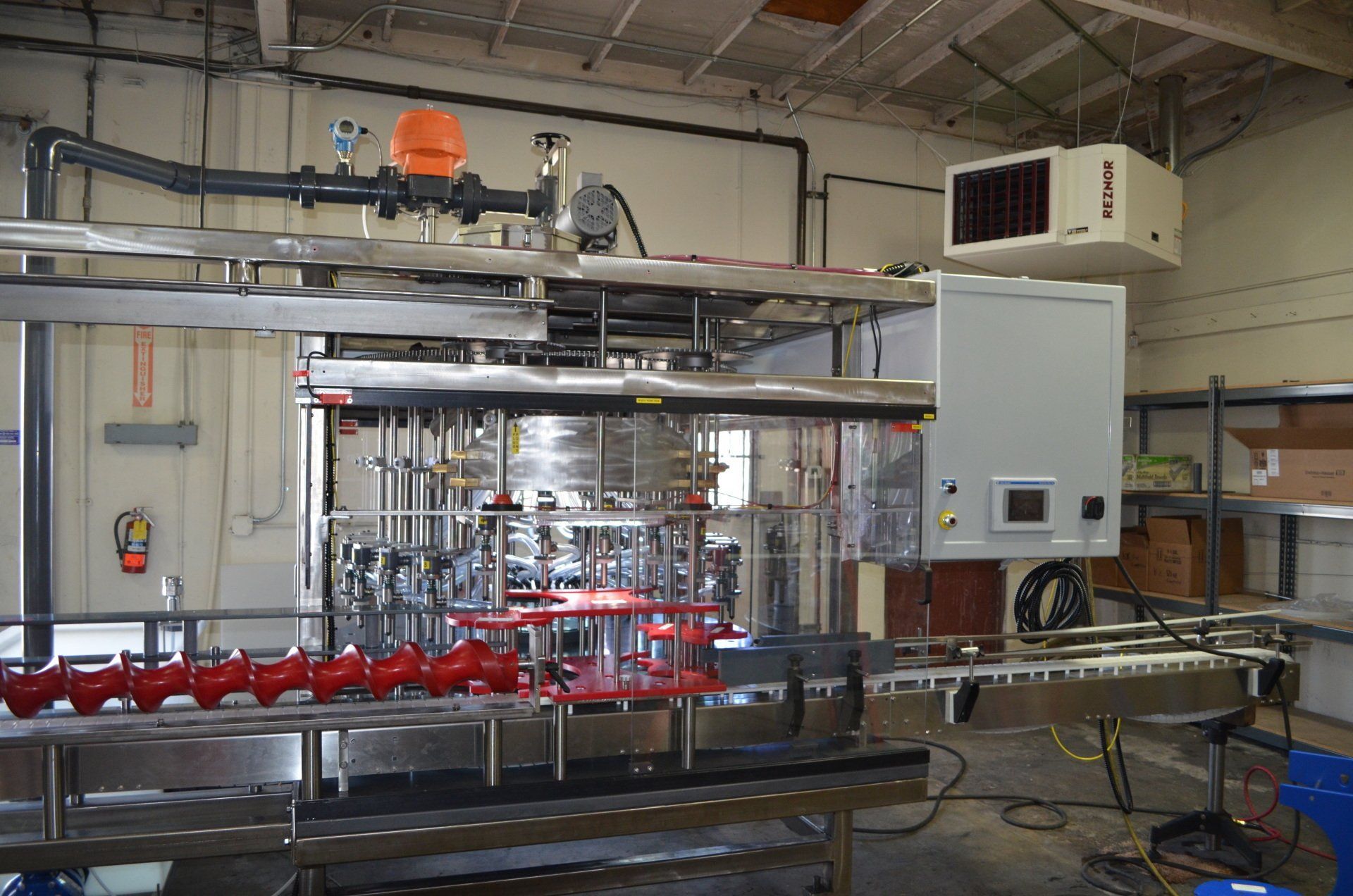
| Rotary | High-speed production | Fast output, compact footprint, easy integration with cappers | Higher complexity and cost |
| Inline | Flexible production | Lower cost, modular expansion, simpler maintenance | Lower speed than rotary |
| Volumetric | Broad liquid range | Accurate fill by volume, adaptable to container shapes | May be less ideal for extreme viscosities without the right pump/cylinder |
| MAGFlow | Conductive liquids | Hygienic, accurate, no moving parts in meter | Not ideal for oil-based/non-conductive products |
| MASSFlow | High-value liquids | Very high accuracy across varying product conditions | Typically more expensive |
| Pressure Metering | Viscous or controlled-flow products | Consistent flow and delivery control | Requires careful system tuning |
| Piston | Thick products | Excellent for viscous, chunky, or difficult products | Slower than simpler gravity systems |
| Overflow | Fill-to-level presentation | Uniform shelf appearance, good for foaming liquids | Volume may vary slightly by container |
| Gravity | Thin liquids | Simple, economical, reliable | Not ideal for thick or fast-changing products |
| Pressure Gravity | Mixed product families | Flexibility across gravity and pressure modes | More system complexity |
| Pressure | Foamy or carbonated liquids | Better control and speed than gravity | Higher maintenance than gravity |
| Vacuum | Specialized applications | Gentle filling, niche compatibility | Limited fit compared with mainstream technologies |
| Monobloc Filler-Capper | High-efficiency lines | Space-saving, integrated operation | Less modular than separate machines |
Industry Alignment
For bleach, household cleaners, industrial chemicals, and some personal care products, the main concerns are chemical compatibility, corrosion resistance, and reliable handling of thin to moderately viscous liquids. For these products, rotary or inline systems with volumetric, flow-meter, pressure, or overflow options are often the most relevant starting points.
For food and beverage, pressure, overflow, gravity, volumetric, and flow-meter systems are especially important because these products may be foamy, conductive, carbonated, or shelf-presented in clear containers. Rotary monobloc systems are also common when speed and capping integration matter.
For automotive and many industrial chemical applications, MASSflow, pressure metering, piston, and rotary monobloc configurations are often attractive because they support higher precision, more demanding product behavior, and stronger line control.
Selection Criteria
The first selection question should be product behavior: is the liquid thin, thick, foamy, conductive, non-conductive, hazardous, or sensitive to aeration? That answer usually narrows the field faster than container size or speed alone.
The second question is production architecture: does the customer need maximum throughput, or do they need flexibility, lower cost, and easier expansion? Rotary and monobloc systems usually favor throughput, while inline systems often favor adaptability.
The third question is packaging presentation: does the customer care about exact volume, exact level, or simply reliable closure after fill? Overflow and level-based systems serve appearance-driven applications, while volumetric, MASSflow, and piston systems serve precision-driven applications.
Positioning Language
Laub\Hunt can position these machines as a portfolio rather than isolated products. That allows the sales message to start with the customer’s liquid and container requirements, then move to the best mechanical platform, rather than forcing customers into a one-size-fits-all category.
A useful framing is: rotary for speed, inline for flexibility, piston for thickness, overflow for appearance,
MAGflow for conductive liquids, MASSflow for highest accuracy, and monobloc for integrated efficiency.
5 Key Takeaways
- The best filling machine depends first on the product, not the machine name. Liquid behavior such as viscosity, foaming, conductivity, and sensitivity to aeration determines the right technology.
- Rotary systems are best when speed and compact footprint matter most. They are a strong fit for high-output lines and can integrate well with capping.
- Inline systems are best when flexibility and easier changeovers matter. They are often the better choice for lower-to-moderate production volumes or multiple product formats.
- Filling method matters as much as machine layout. Volumetric, MASSflow, piston, overflow, gravity, pressure, and vacuum systems each solve different packaging challenges.
- Monobloc filler-cappers improve efficiency by combining fill and cap operations. They are especially useful when floor space, line synchronization, and throughput are important.
See part 1 and part 3 for more information. Contact us for a quote.