10 Frequently asked Questions about Designing a Liquid Filling Line - Part 3
May 12, 2026
10 Frequently asked Questions about Designing a Liquid Filling Line - Part 3
A complete liquid filling production line is a coordinated system of machines that must be designed as one process—from bottle infeed through palletizing—to achieve safe, repeatable, high‑OEE production, especially when handling caustic or hazardous liquids.
- What information do I need before designing a liquid filling line?
You should define your products (including corrosivity and viscosity), containers and closures, required speeds, changeover frequency, and any hazardous‑area or sanitation requirements.
- Why use a monobloc filler‑capper instead of separate machines?
A monobloc reduces floor space, bottle transfers, and interfaces, improving efficiency, accuracy, and changeover time compared with separate filler and capper units.
- How do I size the line speed for my operation?
Start from the required bottles per shift or year, then select a filler‑capper capacity and coordinate the unscrambler, cleaner, labeler, case packer, and palletizer to run at compatible or slightly higher nominal speeds.
- What special design features are needed for caustic products?
Use corrosion‑resistant materials, sealed or purged electrical enclosures, robust containment and drainage, and components rated for any hazardous classification that applies.
- How are the machines controlled as one system?
A line‑level PLC and HMI exchange run, fault, starve, blocked, and speed signals with each machine, coordinating conveyors, accumulation, and safety circuits for smooth operation.
- What role does accumulation play in line performance?
Accumulator systems buffer product when a downstream machine pauses, preventing upstream shutdowns and significantly improving overall line uptime.
- How accurate can modern liquid fillers be?
With appropriate filling technology and controls, modern systems routinely achieve high accuracy for a wide range of viscosities while maintaining high speeds, especially with servo‑driven volumetric or flow‑meter fillers.
- Can one line handle different bottle sizes and products?
Yes, provided the machines are specified with the right adjustment ranges, change parts, and recipe‑based settings; design for changeover from the start if SKU variety is important.
- What are the main safety concerns with hazardous or caustic lines?
Key risks include chemical exposure, slips, and ignition in classified atmospheres; mitigations include proper enclosures, intrinsically safe devices, spill management, guarding, and operator training.
- How long does it take to commission a new line?
Timelines vary with complexity, but allowing sufficient time for installation, integration, FAT/SAT, and operator training is critical to achieving nameplate speed and reliability.
- How should uncapped containers filled with caustic product be handled?
When handling uncapped containers filled with caustic or hazardous liquids, it is critical to minimize agitation and mechanical interaction to prevent splashing or spills. In these cases, properly capped containers can be diverted onto a parallel conveyor, allowing uncapped containers to remain on the main conveyor without interruption.
This approach reduces the risk of exposure caused by push-arm mechanisms or other transfer devices that could disturb the liquid. While this method differs from standard container handling practices, it is recommended in applications involving caustic products where operator safety and spill prevention are top priorities. Contact Laub/Hunt for more information.

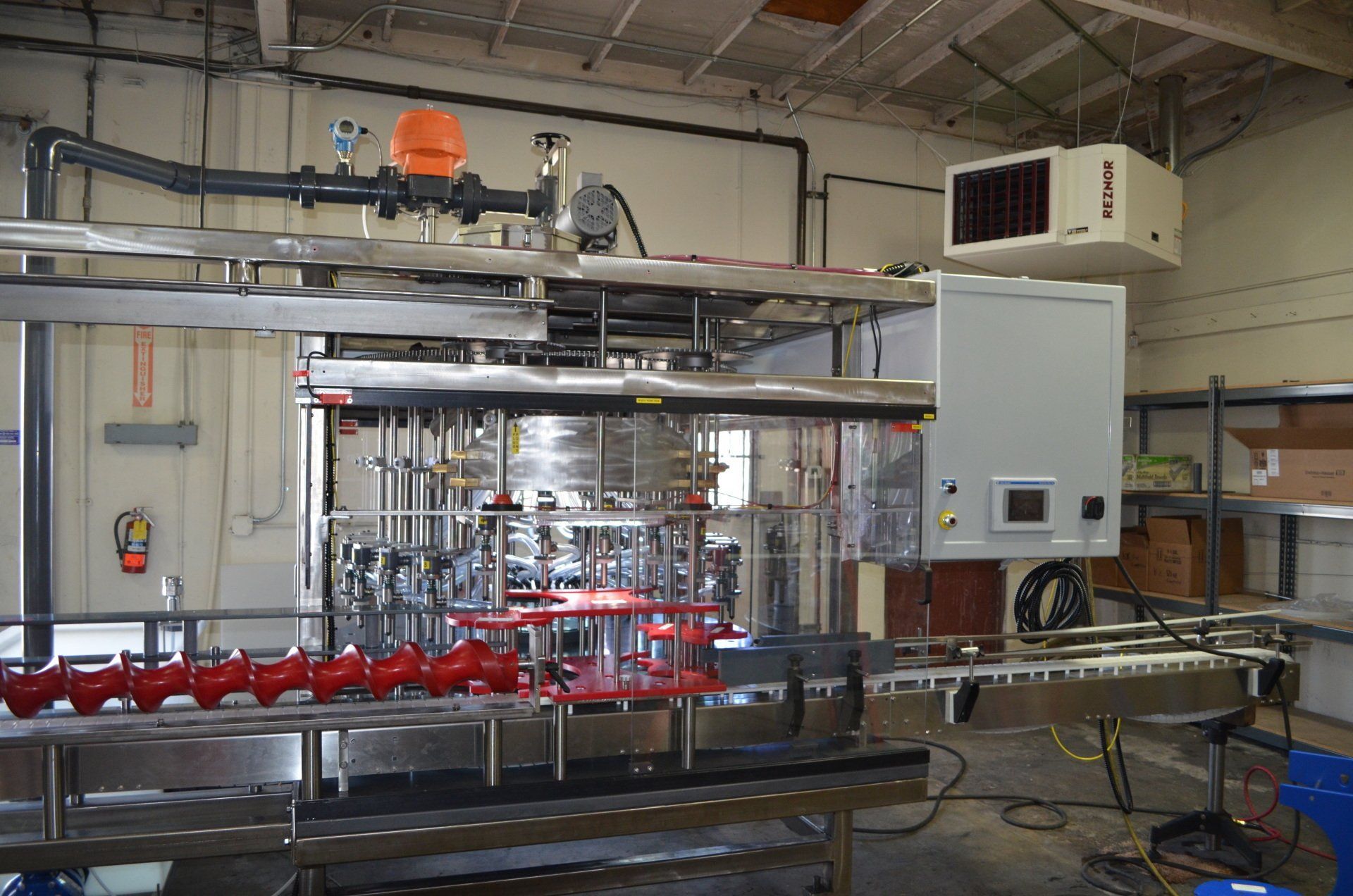
During Factory Acceptance Testing (FAT), Laub\Hunt Packaging Systems runs your filler through a structured, checklist‑driven trial in their plant—verifying lubrication, mechanical alignment
NeverDown - Preventative Maintenance Press Release For Immediate Release Contact: Jeff Hunt Phone: (888) 671-9338 Email: jhunt@laubhunt.com https://www.laubhunt.com/ Laub\Hunt Launches NeverDown—A Preventive Maintenance Service Built for Equipment Reliability and Uptime New Service Offering Combines Proactive Maintenance, Remote Support, and Customized Plans to Reduce Downtime and Maximize ROI Norwalk, CA – June 23, 2026 – Laub\Hunt Packaging Systems , a leading manufacturer of precision liquid filling equipment serving the Bleach, Pool / Spa, Food & Beverage, Industrial Chemicals, Household Products, Personal Care, and Automotive industries today announced the launch of NeverDown , a comprehensive service solution designed to help manufacturers reduce downtime, improve equipment performance, and maximize return on investment. For over 75 years, Laub\Hunt has built filling systems known for their accuracy, durability, and reliability. NeverDown extends that commitment beyond installation, providing customers a proactive approach to maintaining peak performance throughout their equipment's lifecycle. "Production interruptions are costly," said Jeff Hunt, President and CEO. " NeverDown helps customers identify and address issues before they become problems, giving them greater visibility and confidence in their operations." A Proactive Approach to Equipment Reliability Unlike traditional reactive service models, NeverDown focuses on preventive maintenance and early intervention through: Routine mechanical and system inspections Calibration of filling accuracy and consistency Verification of seals, valves, and critical operating components Cleaning and conditioning of components exposed to corrosive products Performance testing under actual operating conditions Each service visit follows a detailed inspection checklist customized to the specific equipment configuration, ensuring comprehensive and consistent evaluations over time. Customized Maintenance Programs Laub\Hunt tailors each program to customer requirements—from monthly inspections to annual comprehensive evaluations—coordinating maintenance with production schedules to minimize disruption. Programs account for production volume, operating conditions, product corrosiveness, and uptime objectives. Replace Before Failure Rather than waiting for unexpected failures, NeverDown manages wear items through planned replacement cycles, reducing unplanned downtime, preventing secondary equipment damage, maintaining filling accuracy, and lowering lifecycle costs. Responsive Support FillSure combines on-site field service with remote diagnostics, enabling rapid issue resolution while deploying technicians only when hands-on intervention is necessary. "As manufacturers focus on productivity and cost control, reliable equipment becomes critical," Hunt added. "NeverDown provides the structure and expertise customers need to keep operations running at peak performance." Through structured maintenance planning, detailed inspections, proactive parts management, and responsive support, Laub\Hunt helps manufacturers gain greater control over equipment performance while reducing operational uncertainty. About Laub\Hunt Laub\Hunt Packaging Systems designs and manufactures precision liquid filling equipment for the bleach, pool and spa, food and beverage, industrial chemical, household products, personal care, and automotive industries.| With more than 75 years of manufacturing heritage, the company is recognized for building high-quality, simple-to-operate filling systems that deliver exceptional accuracy, reliability, and long-term value. Laub\Hunt's equipment is installed throughout North America and around the world, helping manufacturers improve productivity and maintain consistent product quality. For more information about NeverDown and Laub\Hunt’s complete line of packaging solutions, contact Jeff Hunt at (888) 671-9338, or via email at jhunt@laubhunt.com . https://www.laubhunt.com/contact https://www.laubhunt.com/
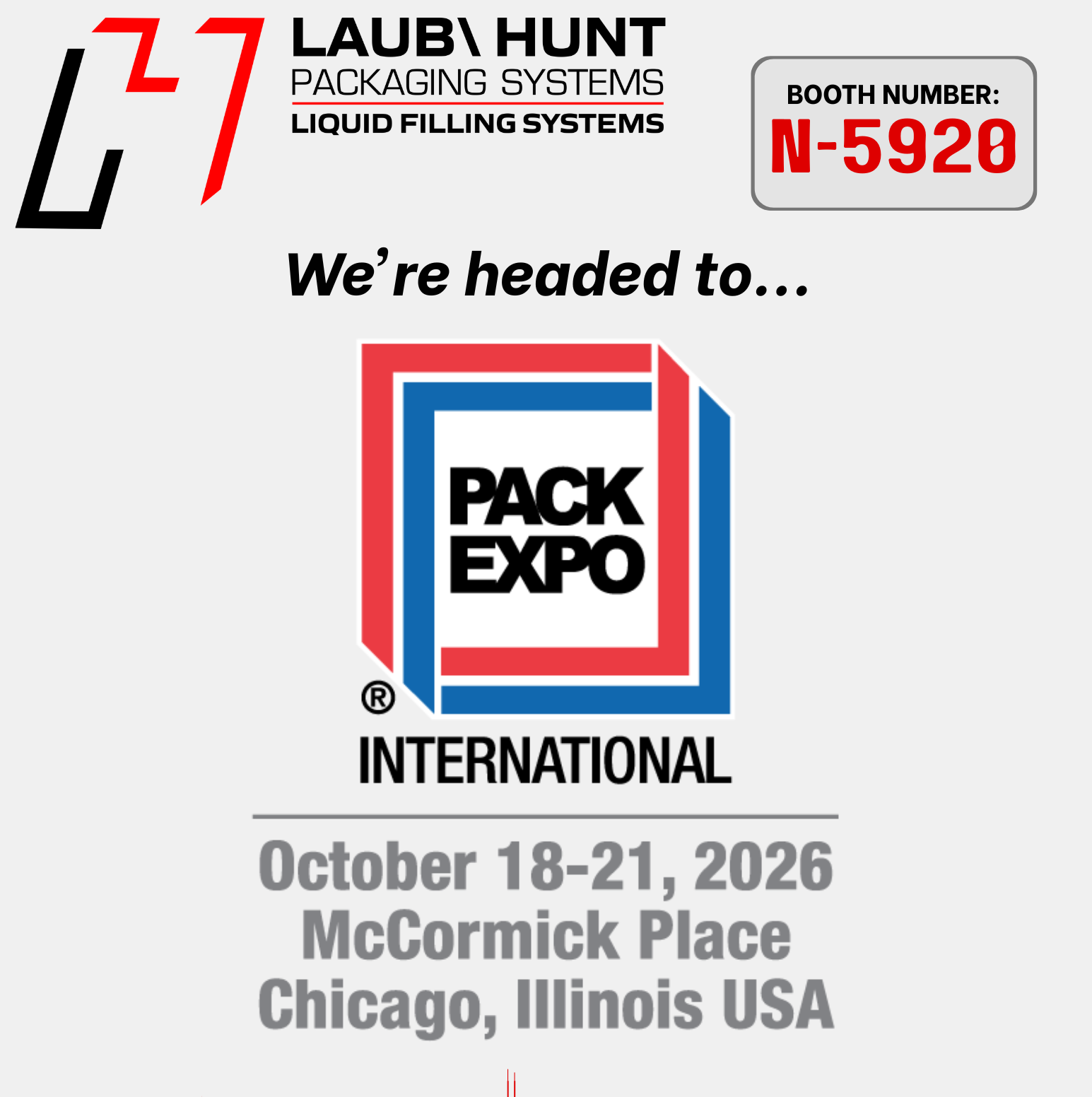
Are you looking for innovative liquid filling equipment and packaging solutions for your production line? Join Laub\Hunt Packaging Systems at PACK EXPO International 2026 in Chicago, October 18–21