10 frequently asked questions about Bottle filling Equipment Preventative Maintenance – Part 3

April 22, 2026

10 frequently asked questions about Bottle filling Equipment Preventative Maintenance – Part 3


1. How often should we perform preventative maintenance on our liquid fillers?
Preventative maintenance should follow a layered schedule: daily cleaning and checks, weekly mechanical and pneumatic inspections, monthly calibration and deeper inspection, and annual overhauls or OEM service visits. The exact intervals depend on operating hours, product characteristics (especially caustic or abrasive liquids), and regulatory requirements.


2. What are the most critical components to inspect regularly?
Critical components include nozzles and valves, seals and gaskets, pumps and metering systems, conveyors and drives, sensors, and safety devices such as guards and interlocks. In caustic applications, any product‑contacted metal and elastomer components warrant especially close and frequent inspection.


3. How does preventative maintenance improve fill accuracy?
Regular cleaning prevents residue buildup that changes flow characteristics, while calibration verifies and adjusts the metering system to stay within tolerance. Replacing worn seals, valves, and pumps reduces leaks and drift, resulting in consistent fill volumes across batches and container sizes.


4. What are the risks of skipping preventative maintenance?
Skipping maintenance increases the likelihood of sudden breakdowns, extended downtime, emergency repair costs, and lost production. It also elevates the risk of underfills, overfills, contamination, safety incidents, and failure to pass customer or regulatory audits.


5. How should we adapt maintenance for caustic chemical filling?
For caustic products, use materials and seals rated for chemical compatibility and follow manufacturer guidance on cleaning and CIP agents. Increase inspection frequency for corrosion and elastomer degradation, ensure proper ventilation and containment, and provide specialized PPE and safety procedures for operators and technicians.


6. Do we need specialized tools for calibration and maintenance?
Effective preventative maintenance typically requires accurate scales or volumetric testing equipment, torque tools, basic electrical and pneumatic test instruments, and cleaning/CIP equipment suited to the product. For advanced diagnostics or safety‑critical work, OEM‑specific tools and software may be recommended.


7. How can we minimize downtime while performing preventative maintenance?
Plan maintenance during scheduled breaks, shift changes, or off‑peak periods, and cluster tasks to reduce changeover. Maintain a stock of critical spare parts and clear procedures so technicians can complete tasks quickly and consistently.


8. What documentation should we keep for our maintenance program?
Keep maintenance schedules, completed checklists, work orders, calibration records, parts replacement history, and training logs. These records support troubleshooting, budgeting, audits, and continuous improvement of the maintenance plan.


9. When should we involve the original equipment manufacturer or a certified service provider?
Involve the OEM or certified provider for annual inspections, complex diagnostics, major repairs, control‑system modifications, and when performance issues persist despite routine maintenance. Their expertise can also help optimize settings for new products or packaging formats and update maintenance recommendations.


10. How can we measure the success of our preventative maintenance program?
Key indicators include reductions in unplanned downtime, emergency repair costs, and scrap or rework related to filling errors. Tracking mean time between failures, maintenance compliance to schedule, and audit findings provides a quantitative view of program effectiveness over time.
Preventitive Maintenance
April 12, 2026
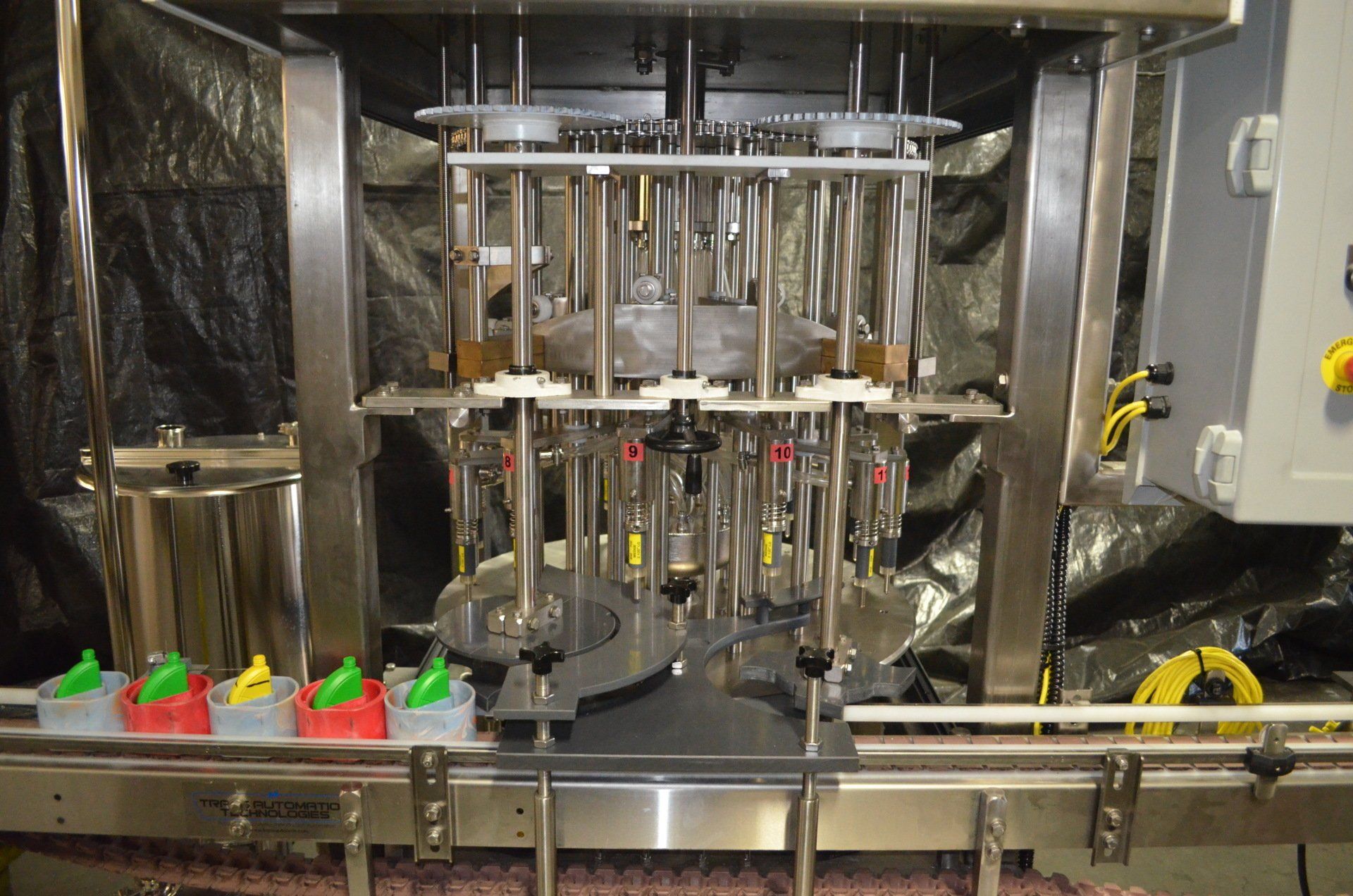
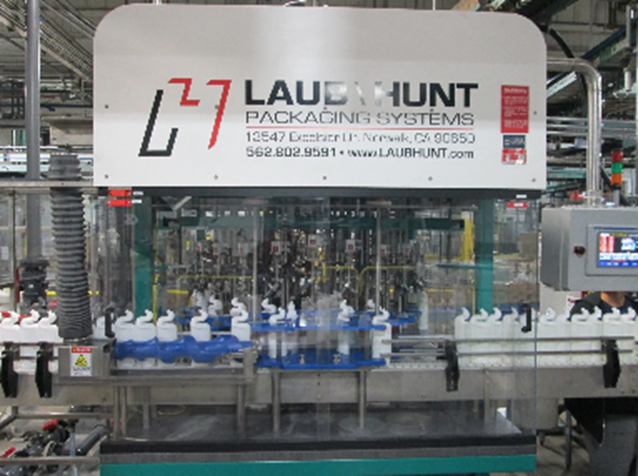
How to perform preventative maintenance on liquid filling equipment. Below is a practical framework you can adapt for Laub\Hunt’s machines operating in your liquid filling line. Build a structured maintenance plan Document the asset: ● Record model/serial numbers, configuration (nozzle count, metering type, caustic‑duty options), and operating parameters. ● Map critical subsystems: product contact path, tanks/hoppers, pumps, metering devices, nozzles, capper or downstream integration, conveyors, controls, pneumatics. Create a preventive maintenance schedule: ● Break tasks into daily, weekly, monthly, and annual intervals, aligned with manufacturer guidelines and production intensity. ● Include special intervals for caustic products (e.g., more frequent seal inspection, verification of chemical‑compatible components). Establish documentation: ● Maintenance checklists for each interval and machine type. ● Log sheets (paper or CMMS) to record date, person, tasks performed, findings, and parts replaced. ● Standard operating procedures (SOPs) for cleaning, lockout/tagout, and spill/chemical handling. Assign responsibility: ● Operators handle routine cleaning, visual checks, and basic adjustments. ● Maintenance technicians handle mechanical/electrical diagnostics, calibration, and component replacement. ● OEM or certified service providers perform annual inspections, upgrades, and complex overhauls. Daily maintenance tasks Designed to keep the filler clean, safe, and ready for the next shift. ● Clean product contact parts: ● Flush the product path with appropriate cleaning or CIP solutions, based on chemical compatibility and regulatory requirements. ● Remove, clean, and reassemble nozzles, valves, and gaskets as specified in the manual to avoid residue buildup and clogs. ● Inspect for visible issues: ● Look for leaks, drips, or product pooling under the machine and around hoses and fittings. ● Check for unusual noises, vibration, or heat from pumps, motors, and gearboxes.​ ● Confirm that emergency stops, guards, and interlocks are intact and functional. ● Basic functional checks: ● Run a short test to verify consistent fills on sample containers; investigate any variance beyond tolerance. ● Check display indicators, alarms, and HMI messages and address any warning conditions.​ Daily tasks should be quick and standardized so they become part of normal shutdown and startup routines. Weekly maintenance tasks Weekly activities go deeper into mechanical and pneumatic systems and fine‑tune performance. ● Mechanical inspection: ● Inspect belts, chains, sprockets, and couplings for wear and tension; adjust or replace as needed. ● Check nozzle alignment with containers, conveyor guide rails, and infeed/outfeed timing.​ ● Inspect fasteners and mounting hardware for looseness due to vibration.​ ● Lubrication: ● Lubricate bearings, cams, and other moving parts with the correct lubricant and quantity; avoid over‑lubrication that can attract dust or contaminate product areas. ● Pneumatic and utility checks: ● Inspect air lines, filters, regulators, and valves for leaks and moisture; drain water traps and replace filters per schedule.​ ● Verify operating pressures and flow for air and other utilities against specification.​ ● Product and environment specific: ● For caustic applications, inspect exposed metal surfaces, fasteners, and frames for early signs of corrosion or coating damage; repair or replace affected components promptly. ● Confirm secondary containment and spill trays are clean and functional where required.​ Monthly maintenance tasks Monthly tasks involve more comprehensive inspection, calibration, and component replacement. ● Calibration and performance: ● Perform formal fill‑volume calibration using gravimetric or volumetric checks on multiple containers and fill levels. ● Adjust metering system parameters (stroke length, pump speed, timing) to restore accuracy and repeatability. ● Document before/after readings and updated settings. ● Deep cleaning and inspection: ● Partially disassemble manifolds, valves, and metering components for internal inspection and cleaning. ● Inspect seals, O‑rings, gaskets, and diaphragms for swelling, cracking, flattening, or chemical attack. ● Check electrical enclosures for dust or moisture ingress and verify tightness of terminals and connections (following lockout/tagout).​ ● System checks: ● Validate sensor performance (level sensors, photoeyes, encoders, load cells) and adjust or replace if drifting.​ ● Review alarm history and recurring faults; investigate root causes rather than repeatedly resetting alarms.​ Annual (or planned shutdown) tasks Annual tasks are often scheduled during plant shutdowns or low‑demand periods. ● Overhaul and upgrades: ● Replace high‑wear components such as bearings, belts, seals, and hoses, even if not yet failed, based on hours of operation and OEM guidance. ● Evaluate upgrades (e.g., improved seals for caustic duty, enhanced controls, updated guarding) to improve reliability and compliance.​ ● Comprehensive inspection: ● Perform detailed structural inspection of frames, supports, and guards for fatigue, corrosion, or damage.​ ● Inspect tanks, CIP circuits, and piping for pitting or thinning where caustics contact metal; consider thickness testing where critical. ● Validation and documentation: ● Conduct full machine performance validation: speed, accuracy, changeover capability, and safety system testing. ● Review and update maintenance procedures, checklists, and spare‑parts strategies based on the past year’s data. ● Schedule OEM or certified technician visits for an expert inspection and recommendations. Spare parts and documentation management Effective preventative maintenance depends on having the right parts and information available. ● Maintain a critical‑spares list: ● Identify and stock components with long lead times or high failure impact (e.g., seals, valves, sensors, drives, PLC/HMI modules). ● Standardize: ● Where possible, standardize components (sensors, pneumatics, fasteners) across multiple fillers to simplify stocking and training.​ ● Recordkeeping: ● Track parts usage to refine stocking levels and to spot patterns in failures. ● Keep manuals, electrical drawings, and pneumatic schematics readily accessible at the machine or in a digital repository. Training and culture Even the best plan fails without trained and engaged people.​ ● Operator training: ● Train operators on daily checks, cleaning, basic troubleshooting, and when to escalate issues. ● Provide refresher training, especially after near‑misses, changes in product, or machine upgrades.​ ● Maintenance training: ● Train maintenance staff on OEM procedures, safe handling of caustic products, and proper use of test and calibration equipment. ● Continuous improvement: ● Encourage reporting of minor issues, near‑misses, and ideas to improve reliability; integrate this feedback into the maintenance program. key takeaways Preventative maintenance is a proactive, scheduled program of inspection, cleaning, calibration, and part replacement that protects liquid fillers from unexpected failures. A structured daily/weekly/monthly/annual maintenance schedule dramatically reduces unplanned downtime, improves fill accuracy, and extends equipment life. For caustic chemical applications, frequent inspection of product‑contact components and corrosion‑prone areas is critical to safety, reliability, and compliance. Documentation—checklists, logs, and training records—is essential to demonstrate control, satisfy audits, and continuously improve the maintenance program. Investing in training, proper spare‑parts management, and periodic OEM service support yields a lower total cost of ownership and more predictable production performance over the machine’s life. Contact us for more information about maintenance.
Preventative Maintenance for Filling Machines
April 6, 2026
Preventative maintenance for liquid filling equipment is a structured, proactive program of inspection, cleaning, adjustment, and parts replacement that keeps machines reliable, accurate
Piston Versus Flow Meter Liquid Fillers White Paper
March 20, 2026
Piston and flow meter filling systems are both high-accuracy, volumetric technologies. While each is designed to deliver precise...