The Impact of Bottle Filling Accuracy on Product Quality and Cost

August 31, 2024

The Impact of Bottle Filling Accuracy on Product Quality and Cost


In the beverage and pharmaceutical industries, bottle filling is a critical step in the production process. Ensuring the accuracy of bottle filling is not just about maintaining product quality; it directly affects the operational costs and overall profitability of a business. Accurate bottle filling is essential to meet regulatory standards, ensure customer satisfaction, and minimize waste, which can significantly impact both product quality and production costs.

The Importance of Bottle Filling Accuracy

Accurate bottle filling is essential to maintaining product consistency and quality. When bottles are filled to the correct level, it ensures that each unit meets the specifications promised to the customer. This is particularly important in the pharmaceutical and beverage industries, where dosage accuracy and product integrity are paramount. A consistent fill level not only upholds the quality of the product but also helps in maintaining the brand's reputation for reliability and trustworthiness.

From a regulatory standpoint, precise bottle filling is also crucial. Regulatory bodies set stringent guidelines regarding fill levels, especially in industries where the product is ingested or applied. Non-compliance with these regulations can result in costly fines, recalls, and damage to a company's reputation. By maintaining accurate filling processes, businesses can avoid these risks and ensure that their products are always in line with industry standards.


How Bottle Filling Accuracy Affects Costs


Inaccurate bottle filling can lead to significant financial losses. Overfilling bottles may seem like a minor issue, but when considered across a large production run, it can lead to substantial product loss. The cost of the excess product, multiplied by thousands or even millions of units, can quickly add up, impacting the bottom line. Additionally, overfilled bottles may require additional packaging or may not pass quality control checks, leading to increased waste and rework costs.

Underfilling, on the other hand, can lead to customer dissatisfaction and returns. Customers expect to receive the quantity they pay for, and short-filled bottles can damage the trust they have in a brand. In competitive markets, even small discrepancies can lead to loss of market share as consumers turn to competitors. Moreover, underfilled products might not meet legal requirements, leading to potential legal issues and fines.


Technologies That Enhance Bottle Filling Accuracy


To mitigate these risks, many companies invest in advanced bottle filling technologies that ensure precise and consistent fill levels. Modern filling machines come equipped with sensors and automated controls that adjust the fill levels in real time, compensating for variations in bottle size, temperature, and viscosity of the liquid. These technologies not only improve accuracy but also enhance the efficiency of the filling process, reducing downtime and increasing throughput.

Volumetric filling machines, for example, measure the exact volume of liquid before dispensing it into bottles, ensuring consistent fill levels regardless of external conditions. Similarly, gravimetric filling systems use weight measurements to achieve high levels of accuracy, making them ideal for products where precise dosing is critical. By choosing the right filling technology, businesses can achieve optimal accuracy, reduce waste, and enhance product quality.

The Role of Quality Control in Bottle Filling

Quality control plays a vital role in maintaining bottle filling accuracy. Regular calibration of filling equipment, routine maintenance checks, and implementing automated inspection systems can help detect and correct inaccuracies before they result in significant production losses. Automated inspection systems, such as vision systems, can detect underfilled or overfilled bottles on the production line, allowing for immediate corrective action and minimizing the impact on overall production.

Moreover, implementing a robust quality control system helps in identifying patterns of inaccuracy that may indicate underlying equipment issues or process inefficiencies. By addressing these issues promptly, businesses can maintain high levels of filling accuracy, ensuring product quality and reducing costs associated with waste and rework.

The accuracy of bottle filling is a critical factor that influences both product quality and production costs. By investing in advanced filling technologies and maintaining rigorous quality control standards, businesses can ensure precise and consistent filling levels. This not only enhances product quality and customer satisfaction but also minimizes waste and reduces costs, contributing to overall profitability. In today’s competitive market, achieving accurate bottle filling is not just an operational necessity but a strategic advantage that can set a brand apart from its competitors.  Contact us for more information.
How Laub\Hunt Packaging Systems Builds a Liquid Filling Machine
August 3, 2026
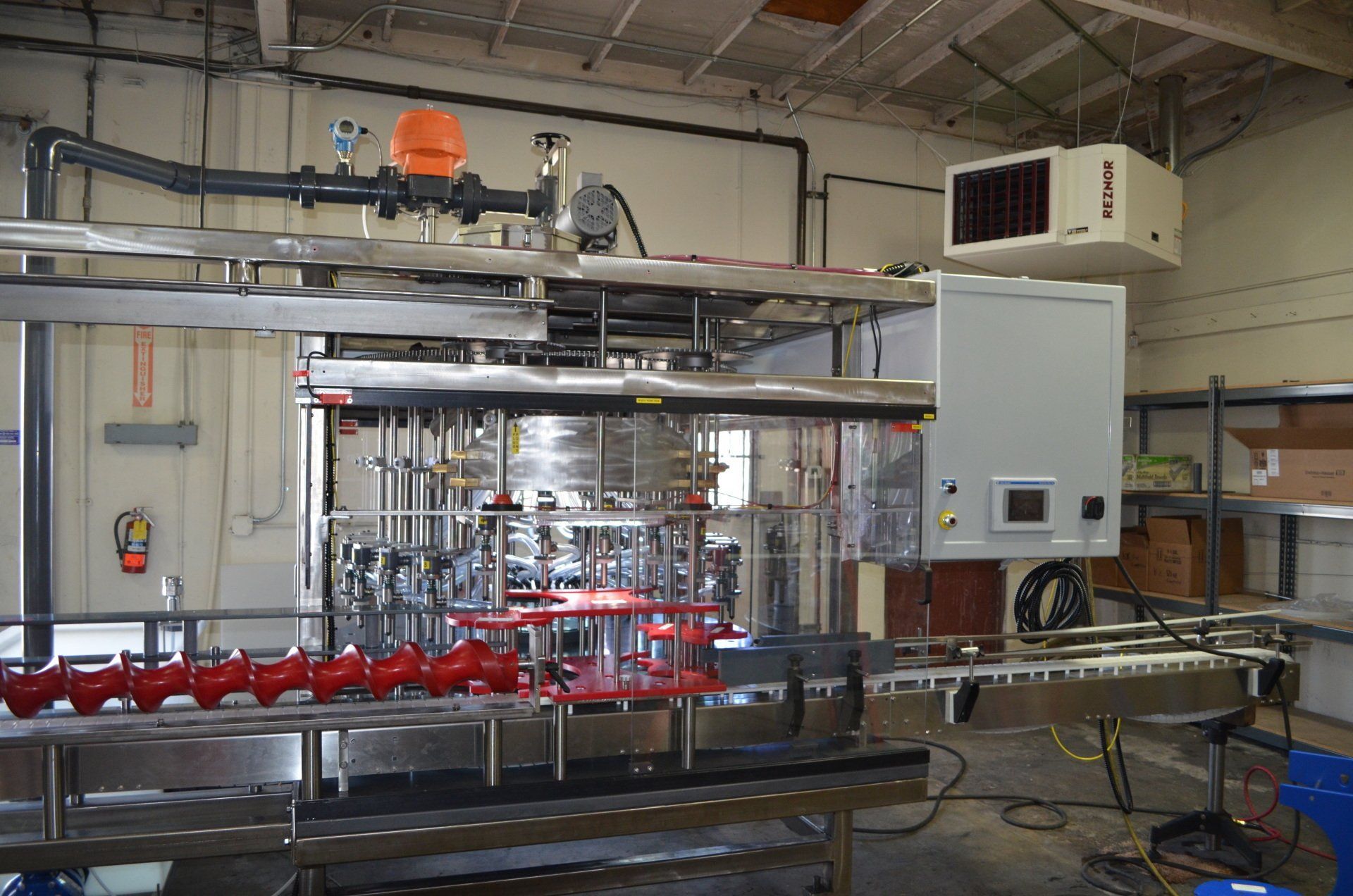
Laub/Hunt Packaging Systems builds a liquid filling machine by starting with the product, container, and production target, then engineering the dose-control, sanitary design, and line integration around those requirements.
July 27, 2026
Clean-in-Place Liquid Filling Systems For Modern Packaging Operations – Part 3 Limits and Risks CIP is not automatic proof of cleanliness. If a line is poorly designed, undersized, or run with the wrong chemistry and cycle parameters, residue can remain even though the equipment was “cleaned”. In practice, CIP works best as part of a broader sanitation program that may include inspection, maintenance, and periodic deeper cleaning or passivation where needed. Another risk is overconfidence in automation. Sensors, valves, pumps, and spray devices must be maintained, and cleaning recipes should be validated against the actual soils and products being handled. For corrosive or high-residue products, system materials and seal selection become critical to long-term reliability. Laub\Hunt Packaging Systems Laub\Hunt is well-positioned to address CIP requirements because its filling systems emphasize sanitary design, precision, and line integration. Its machines are designed with CIP product flush systems and sanitary meters. Its complete packaging lines connect filling equipment with surrounding upstream and downstream systems. For customers in bleach, pool/spa, food and beverage, household products, personal care, and industrial chemicals, that combination is important. It means CIP is not treated as an add-on, but as an integral part of the machine architecture and production workflow. In practical terms, that translates into faster changeovers, better product protection, and lower lifecycle cleaning cost. Conclusion CIP liquid filling systems are essential where cleanliness, speed, and repeatability must coexist. Their value comes from integrating sanitary engineering, automated controls, and process-aware machine design into one dependable production platform. For manufacturers evaluating new filling equipment, the key question is not only whether a machine can be cleaned in place, but whether its design allows CIP to be consistently effective in real-world production.  Frequently Asked Questions 1. What is a Clean-in-Place (CIP) liquid filling system? A CIP liquid filling system is designed so product-contact surfaces can be cleaned internally without fully disassembling the equipment. This helps manufacturers clean filling lines faster, more consistently, and with less manual labor. 2. Why is CIP important in liquid filling operations? CIP helps reduce downtime, improve sanitation, and support product consistency between batches. It is especially valuable in industries where contamination control and frequent changeovers matter. 3. Which industries benefit most from CIP filling equipment? CIP filling systems are commonly used in food and beverage, personal care, household products, industrial chemicals, bleach, and pool/spa products. These industries often require reliable cleaning and repeatable production. 4. How does CIP work in a liquid filler? A CIP process typically circulates cleaning solution, rinse water, and sometimes sanitizing agents through the filler and associated piping. The system uses controlled flow, time, temperature, and chemical concentration to remove residue. 5. What are the main advantages of CIP over manual cleaning? CIP can save time, reduce labor, improve cleaning repeatability, and minimize equipment disassembly. It also helps lower the risk of human error during sanitation. 6. What equipment features support effective CIP cleaning? Good CIP-ready systems often include sanitary product paths, flushable components, proper drainage, compatible seals, and automated valves or controls. The overall machine design is just as important as the cleaning cycle itself. 7. Can CIP systems handle different product viscosities and formulations? Yes, but the system must be designed for the specific application. Thick, sticky, corrosive, or residue-prone products may require different flow rates, spray coverage, and cleaning recipes. 8. How do I know if my current filling line is CIP compatible? You should look at the machine’s product-contact design, drainability, valve arrangement, seals, and control system. A CIP-compatible line should allow cleaning solution to reach all internal contact surfaces effectively. 9. What are the most common CIP mistakes? Common problems include insufficient flow, poor spray coverage, incompatible chemicals, dead legs in piping, and skipping validation. Even a CIP system can underperform if it is not properly designed and maintained. 10. How does CIP support productivity on a packaging line? CIP shortens sanitation time, helps speed up changeovers, and keeps equipment available for production longer. For manufacturers running multiple products, that can translate into better throughput and lower operating costs. Contact us for more information and take a look at parts 1 and 2 of this series .
Clean-in-Place Liquid Filling Systems For Modern Packaging Operations Part 2
July 20, 2026
A CIP-enabled filling system typically includes a dedicated cleaning supply path, pumps, valves, sensors, controls, and spray devices or internal flush nozzles.