Top Benefits of Automated Bottle Filling Machines for Your Business

June 19, 2024

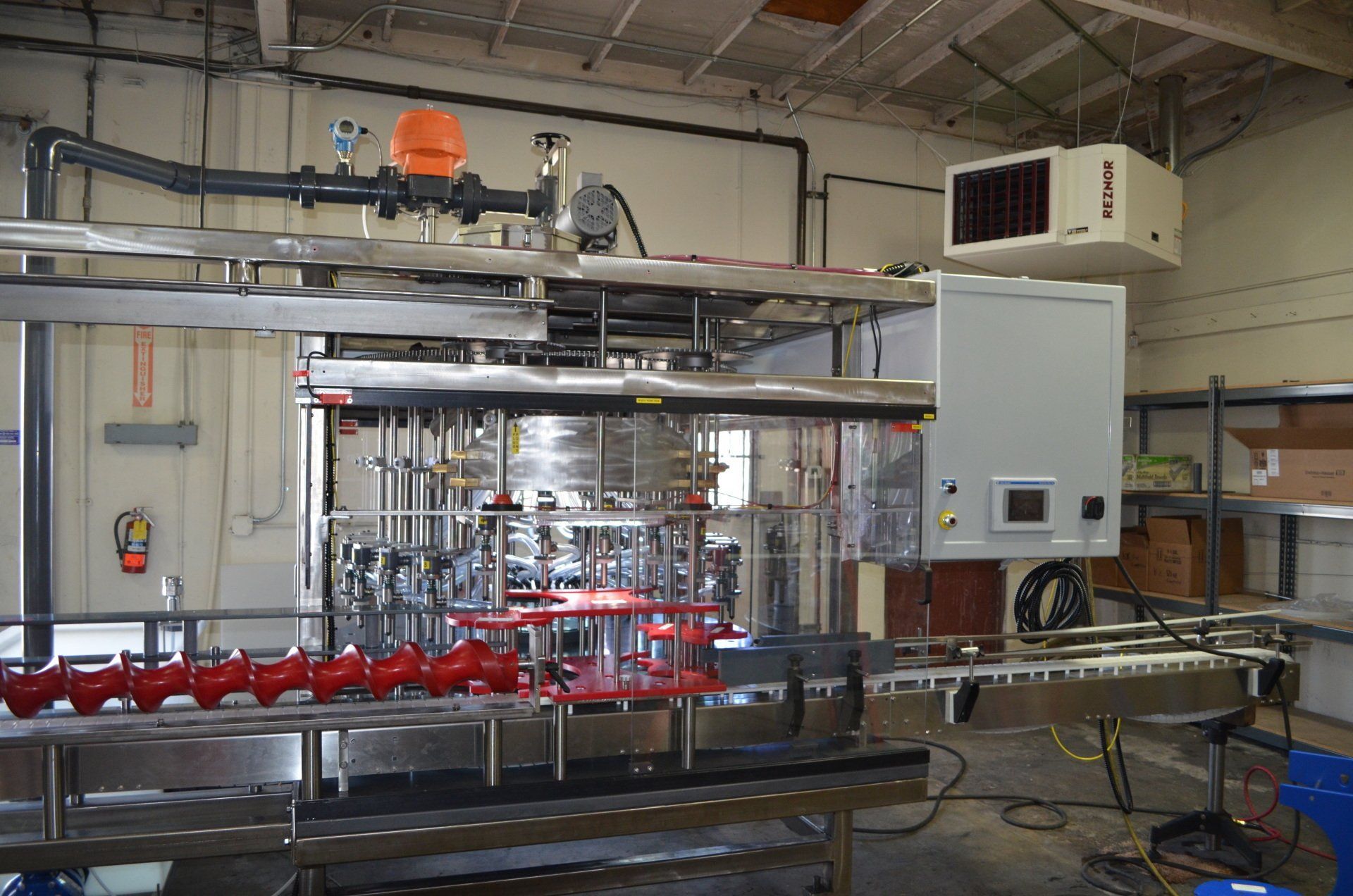
In today's fast-paced production environments, efficiency and precision are paramount. Automated bottle filling machines offer businesses a myriad of benefits that can significantly enhance their operational efficiency and scalability. LaubHunt.com, a leader in providing cutting-edge filling solutions, showcases a range of automated bottle filling machines designed to meet various industry needs. Here, we explore the top benefits these machines can offer to your business.

Increased Efficiency and Productivity

Automated bottle filling machines streamline the filling process, drastically reducing the time it takes to package products. Unlike manual or semi-automatic processes, these machines ensure continuous operation without fatigue or downtime. This high level of automation allows for faster production lines that can handle thousands of units per hour, dramatically increasing your output and meeting higher demand more efficiently.

Enhanced Accuracy and Consistency

Precision is crucial in the filling industry to ensure customer satisfaction and compliance with industry standards. Automated filling machines provide exceptional accuracy in filling volumes, eliminating the variability associated with human error. This consistency ensures that each product meets quality standards, reducing waste and the need for costly reworks.

Cost-Effective Operation

While the initial investment in an automated bottle filling machine might be significant, the long-term savings are substantial. These machines reduce the labor costs associated with manual filling and the expenses incurred from errors and inconsistencies. Additionally, automated machines are designed to use resources more efficiently, such as minimizing excess product waste, which further drives down production costs.


Scalability for Business Growth

As your business grows, so does the need for scalable solutions. Automated bottle filling machines are designed to adapt to increased production needs without requiring proportional increases in labor. This scalability makes it easier for businesses to expand their operations and enter new markets without the growing pains associated with upgrading less flexible systems.


Improved Worker Safety

Automated filling machines minimize the need for direct human interaction with machinery, which significantly reduces workplace hazards. By automating the handling of bottles and the filling process, these machines lower the risk of injuries caused by repetitive motion or exposure to harmful substances.

Better Compliance with Regulations

Compliance with industry standards and regulations is easier to achieve with automated systems. These machines are built to ensure that operations adhere to health, safety, and environmental regulations. Automated systems also facilitate better record-keeping and monitoring, essential for maintaining certification and avoiding legal issues.


Enhanced Flexibility

Modern automated bottle filling machines are designed with flexibility in mind, capable of accommodating a variety of bottle sizes, shapes, and types of liquids. This versatility allows businesses to use a single machine for multiple products, reducing the need for multiple pieces of equipment and streamlining the production process.  Investing in an automated bottle filling machine can transform your business operations, offering not only increased efficiency and productivity but also greater accuracy, cost savings, and scalability. Whether you’re a small startup or a large corporation, the benefits of automation are clear and compelling. Discover how Laub/Hunt's state-of-the-art filling solutions can elevate your production capabilities and help you maintain a competitive edge in your industry.

Go to LaubHunt fillers electiontoday to explore our products and find the perfect solution for your needs.

Filling Machines
May 11, 2026
Successful projects do not end at startup: robust commissioning, operator training, and structured preventative maintenance are essential to sustain performance
May 4, 2026
Liquid Filling Production Lines Introduction - Part 1 A complete liquid filling production line must be engineered as a single, integrated system that transforms empty bottles into palletized, ready‑to‑ship products with high efficiency, safety, and consistency. For manufacturers handling caustic or otherwise challenging liquids, thoughtful line design is especially critical to protect operators, equipment, and product quality over the long term. This three-part white paper walks through the design and installation of a full liquid filling production line, including a bottle unscrambler, bottle cleaning/rinsing machine, liquid monobloc filler‑capper, bottle labeler, case packer, and palletizer, tied together with conveyors, accumulation, and a unified control architecture. It explains how to specify each machine based on product properties, container and closure designs, target speeds, and regulatory or safety requirements, and then shows how these machines are integrated into a coherent, high‑OEE system. Special emphasis is placed on handling caustic and corrosive liquids, where materials of construction, spill containment, and electrical/safety design have outsized impact on reliability and compliance. At the front of the line, the bottle unscrambler and rinser prepare clean, correctly oriented containers at a stable rate, establishing the foundation for downstream performance. The monobloc filler‑capper serves as the technical “heart” of the line, where accurate dosing and secure closure are achieved through carefully chosen filling technology, robust mechanical design, and smart controls that enforce functions such as no‑bottle/no‑fill and no‑cap/no‑torque. The labeler, case packer, and palletizer then transform individual bottles into labeled, coded, and fully palletized unit loads in a sequence that must be precisely matched to the filler‑capper’s throughput to avoid bottlenecks and idle time. 5 key takeaways ( Details to follow in Part 2 and 3) A complete liquid filling line must be engineered as a single system—from bottle unscrambler through palletizer—to meet throughput, quality, and safety targets. The monobloc filler‑capper is the bottleneck and technical heart of the line; its design and controls largely determine overall capacity and accuracy.​ Conveyors, accumulation, and a unified PLC/HMI control architecture are essential to decouple machines, manage surges, and maintain high OEE. Handling caustic or hazardous liquids demands specialized materials, containment, and safety systems, along with strict adherence to applicable standards. Successful projects combine robust mechanical design with disciplined commissioning, operator training, and preventative maintenance to protect uptime and asset life. This three-part paper highlights the central role of conveyors, accumulation, and integrated controls in decoupling machines, absorbing short stoppages, and simplifying operations. A line‑level PLC and HMI coordinate speed, start/stop, and fault handling across all equipment, while safety systems are zoned to protect people without unnecessarily shutting down the entire line. Finally, the white paper underscores that successful projects do not end at startup: robust commissioning, operator training, and structured preventative maintenance are essential to sustain performance, especially in harsh caustic environments where equipment is expected to last for decades. Contact Laub/Hunt for more information.
Preventative Maintenance
April 22, 2026
10 frequently asked questions about Bottle filling Equipment Preventative Maintenance – Part 3 1. How often should we perform preventative maintenance on our liquid fillers? Preventative maintenance should follow a layered schedule: daily cleaning and checks, weekly mechanical and pneumatic inspections, monthly calibration and deeper inspection, and annual overhauls or OEM service visits. The exact intervals depend on operating hours, product characteristics (especially caustic or abrasive liquids), and regulatory requirements. 2. What are the most critical components to inspect regularly? Critical components include nozzles and valves, seals and gaskets, pumps and metering systems, conveyors and drives, sensors, and safety devices such as guards and interlocks. In caustic applications, any product‑contacted metal and elastomer components warrant especially close and frequent inspection. 3. How does preventative maintenance improve fill accuracy? Regular cleaning prevents residue buildup that changes flow characteristics, while calibration verifies and adjusts the metering system to stay within tolerance. Replacing worn seals, valves, and pumps reduces leaks and drift, resulting in consistent fill volumes across batches and container sizes. 4. What are the risks of skipping preventative maintenance? Skipping maintenance increases the likelihood of sudden breakdowns, extended downtime, emergency repair costs, and lost production. It also elevates the risk of underfills, overfills, contamination, safety incidents, and failure to pass customer or regulatory audits. 5. How should we adapt maintenance for caustic chemical filling? For caustic products, use materials and seals rated for chemical compatibility and follow manufacturer guidance on cleaning and CIP agents. Increase inspection frequency for corrosion and elastomer degradation, ensure proper ventilation and containment, and provide specialized PPE and safety procedures for operators and technicians. 6. Do we need specialized tools for calibration and maintenance? Effective preventative maintenance typically requires accurate scales or volumetric testing equipment, torque tools, basic electrical and pneumatic test instruments, and cleaning/CIP equipment suited to the product. For advanced diagnostics or safety‑critical work, OEM‑specific tools and software may be recommended. 7. How can we minimize downtime while performing preventative maintenance? Plan maintenance during scheduled breaks, shift changes, or off‑peak periods, and cluster tasks to reduce changeover. Maintain a stock of critical spare parts and clear procedures so technicians can complete tasks quickly and consistently. 8. What documentation should we keep for our maintenance program? Keep maintenance schedules, completed checklists, work orders, calibration records, parts replacement history, and training logs. These records support troubleshooting, budgeting, audits, and continuous improvement of the maintenance plan. 9. When should we involve the original equipment manufacturer or a certified service provider? Involve the OEM or certified provider for annual inspections, complex diagnostics, major repairs, control‑system modifications, and when performance issues persist despite routine maintenance. Their expertise can also help optimize settings for new products or packaging formats and update maintenance recommendations. 10. How can we measure the success of our preventative maintenance program? Key indicators include reductions in unplanned downtime, emergency repair costs, and scrap or rework related to filling errors. Tracking mean time between failures, maintenance compliance to schedule, and audit findings provides a quantitative view of program effectiveness over time.