Precision Filling for High-Viscosity Products: How Pressure Metering Fillers Improve Accuracy and Efficiency
Precision Filling for High-Viscosity Products: How Pressure Metering Fillers Improve Accuracy and Efficiency
Manufacturers that package thick sauces, spreads, pastes, and semi-liquid foods know that accurate filling can be challenging. Products with high viscosity don’t always flow evenly, and traditional gravity or piston fillers may struggle to maintain consistent portion control. That’s where a pressure metering filler from Laub/Hunt delivers a reliable and precise solution.
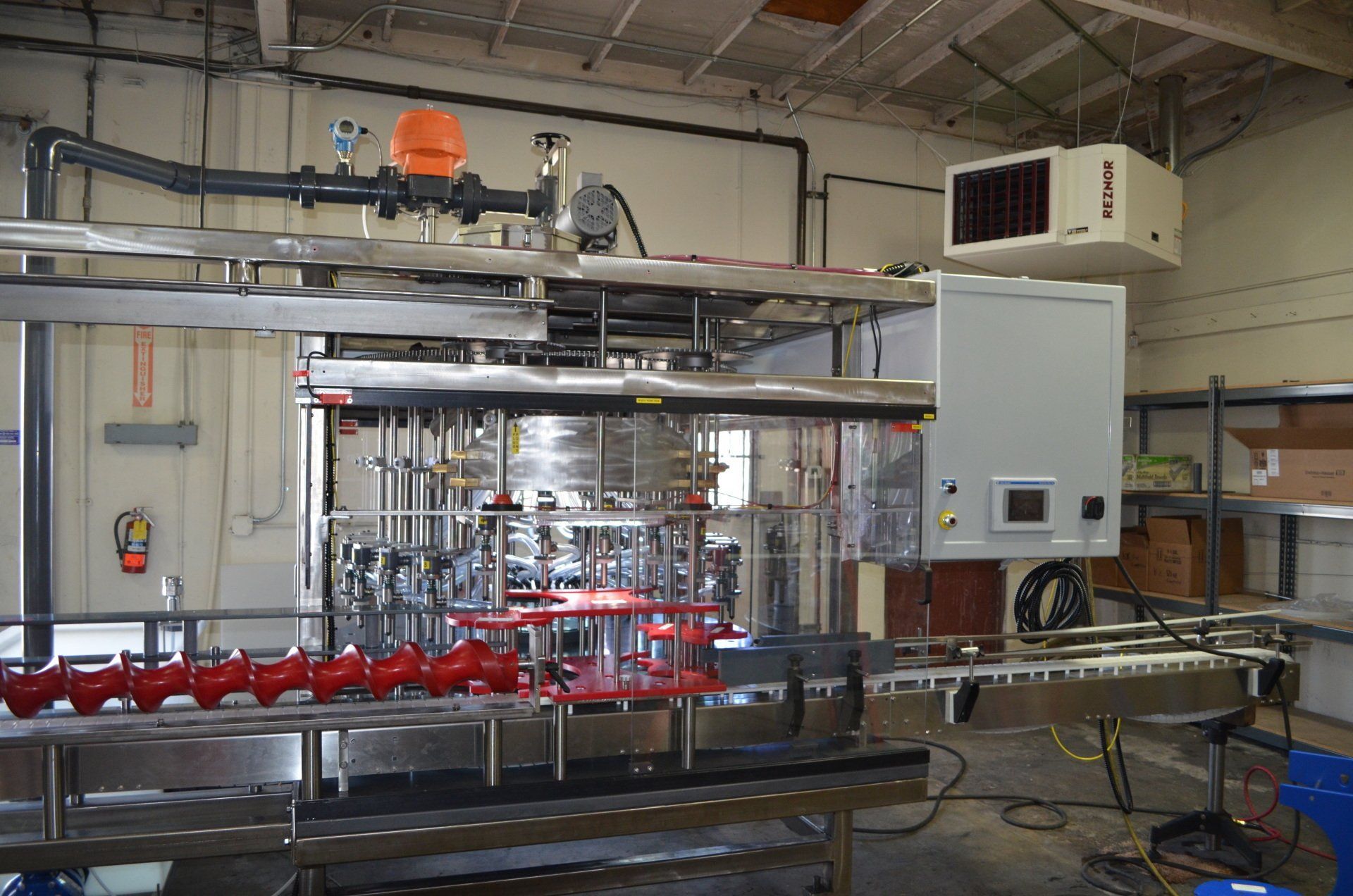
Laub/Hunt manufactures a full line of pressure metering fillers specifically designed for high-viscosity foods and semi-liquid products. These systems are engineered to handle thick, challenging materials while maintaining consistent fill volumes and smooth, efficient operation across a wide range of container sizes.
How a Pressure Metering Filler Works
In a pressure-metering system, the filling head is constructed from three plates sandwiched together. The upper two plates remain stationary, while the bottom plate rotates during operation. A middle Teflon plate provides an excellent bearing surface, allowing the rotating bottom plate to maintain a tight seal and consistent performance.
The upper plate contains one or more product inlet ports. The middle plate features channels that align with these inlet ports. The rotating bottom plate includes ports for each filling nozzle. As each nozzle port passes beneath the inlet port, product flows into the container. Once the port rotates out of position, the flow stops automatically. This precise timing ensures accurate fills with minimal waste or product variation.
Benefits of Pressure Metering Filling Systems
- Consistent fill accuracy for thick and semi-liquid products
- Smooth handling of high-viscosity foods like sauces, pastes, and spreads
- Reduced product waste and improved yield
- Reliable, continuous operation for high-volume production
- Durable design engineered for food processing environments
These systems are ideal for applications such as peanut butter, cheese spreads, salad dressings, condiments, and other products that require controlled, consistent filling.
Designed for Performance and Reliability
Laub/Hunt’s pressure metering filler systems</a> are built with precision engineering and durable materials to withstand demanding production environments. Their simple, effective design reduces maintenance requirements while delivering dependable performance shift after shift.
Ready to improve filling accuracy for your high-viscosity products?
Contact Laub/Hunt today to learn more about their pressure metering fillers and find the right solution for your production line.