Explosion-Proof Liquid Fillers and Monobloc Filler-Cappers - NEMA Ratings: NEMA 7 and NEMA 9 Explained – Part 2
Explosion-Proof Liquid Fillers and Monobloc Filler-Cappers - NEMA Ratings: NEMA 7 and NEMA 9 Explained – Part 2
5. NEMA Ratings: NEMA 7 and NEMA 9 Explained
NEMA 7 – Explosion-Proof for Gas Atmospheres
NEMA 7 enclosures are designed for Class I hazardous locations involving flammable gases or vapors.
Key Features:
● Withstand internal explosions
● Prevent ignition of surrounding gas-air mixtures
● Designed for gases like:
○ Hydrogen
○ Ethylene
○ Propane
Typical Applications:
● Solvent filling lines
● Fuel handling systems
● Alcohol-based product filling
NEMA 9 – Explosion-Proof for Dust Atmospheres
NEMA 9 applies to Class II hazardous locations, where combustible dust is present.
Key Features:
● Prevent ignition of dust clouds or layers
● Dust-tight construction
● Temperature control to avoid dust ignition
Typical Applications:
● Powder processing
● Food and grain industries
● Chemical dust environments
Key Distinction
● NEMA 7 → Gas/vapor hazards
● NEMA 9 → Combustible dust hazards
Many facilities require equipment that addresses both, depending on process conditions.
6. Engineering Design of Explosion-Proof Liquid Filling Machines
6.1 Electrical System Design
● Explosion-proof motors (NEMA 7 rated)
● Sealed electrical enclosures with flame paths
● Certified cable glands and conduit seals
● Intrinsically safe sensors and instrumentation
● Air-purged electrical boxes
6.2 Static Control and Grounding
● Grounding clamps for containers and conveyors
● Anti-static filling nozzles
● Conductive hoses and piping
● Bonding of all metallic components
Static discharge is one of the most common ignition sources—proper grounding is critical.
6.3 Material Selection
For chemical compatibility and durability:
● 316L stainless steel: Corrosion resistance, conductivity
● PTFE (Teflon): Chemical resistance for seals and gaskets
● Polypropylene (PP): Cost-effective for certain corrosive fluids
Material selection must align with both chemical compatibility and electrostatic behavior.
6.4 Mechanical and Process Design
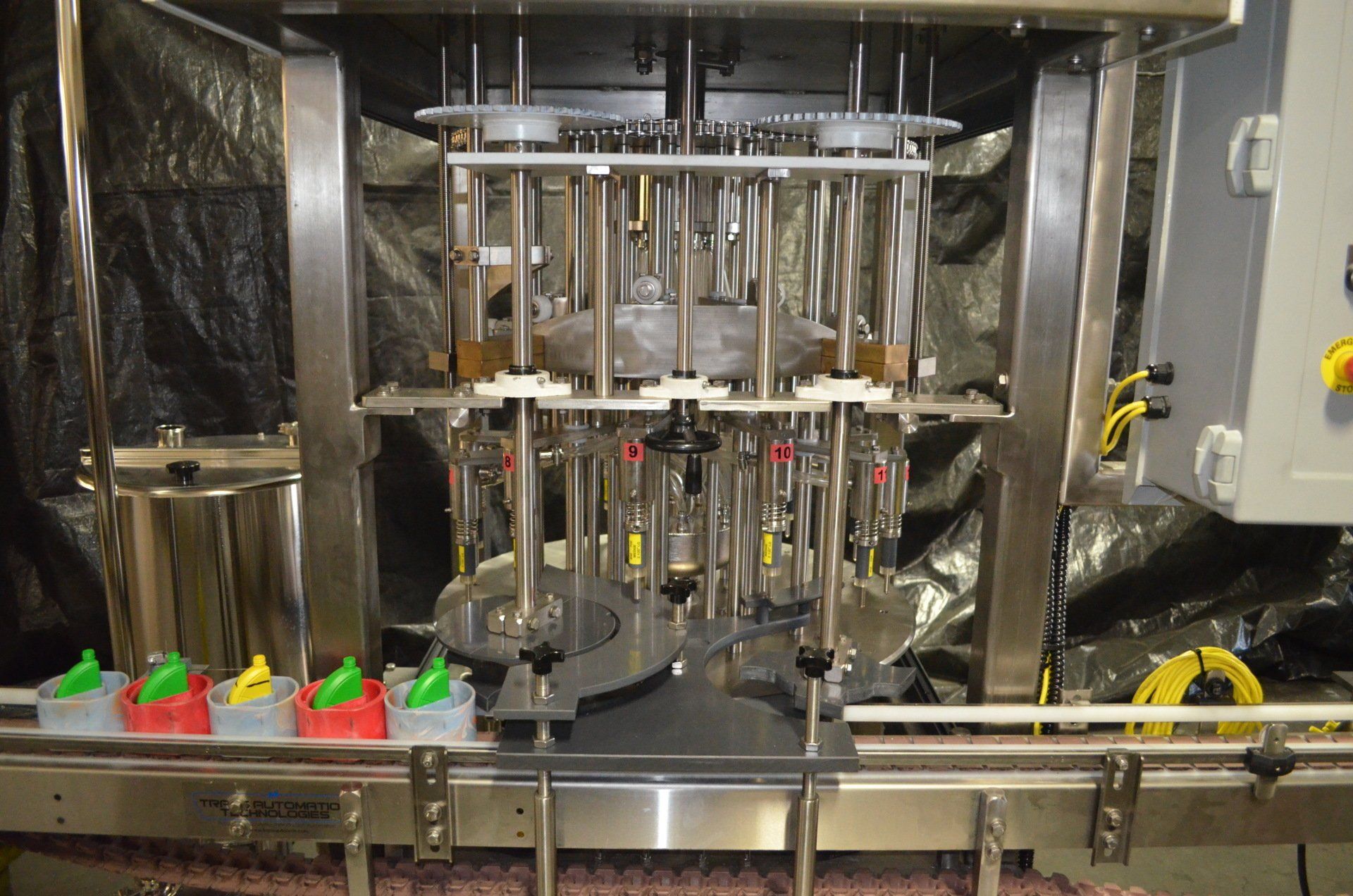
● Rotary or inline filling systems
● Monobloc filler-cappers integrating:
○ Filling
○ Cap placement
○ Torque control
Benefits of Monobloc Systems:
● 20–30% space savings
● Reduced transfer points (lower risk)
● Higher throughput (up to 300+ BPM)
6.5 Vapor Control and Environmental Protection
● Local exhaust ventilation (LEV)
● Vapor recovery systems
● Inert gas blanketing (e.g., nitrogen purging)
These systems reduce the concentration of flammable atmospheres.
6.6 Safety Systems and Controls
● Leak detection systems
● Overfill protection
● Emergency shutdown (E-stop) systems
● Interlocks to prevent unsafe operation
7. Installation Best Practices
Proper installation is as critical as design.
Key Steps:
● Verify all ATEX / IECEx / NEC certifications
● Confirm hazardous area classification
● Install approved cable glands and seals
● Ensure proper grounding and bonding
● Seal all wall and conduit penetrations
Common Errors to Avoid:
● Mixing intrinsically safe (IS)[1] and non-IS circuits
● Improper thread engagement on enclosures
● Inadequate grounding
● Unsealed conduit entries
8. Maintenance and Operational Reliability
Routine maintenance ensures ongoing compliance and safety.
Recommended Practices:
● Inspect seals and flame paths regularly
● Verify grounding continuity
● Check sensors and valves for proper operation
● Clean product-contact components (e.g., PTFE, PVC)
● Re-certify critical components as required
9. Key Takeaways
● Explosion-proof design contains ignition events, rather than eliminating them
● NEMA 7 and NEMA 9 address gas and dust hazards, respectively
● Grounding and static control are essential, not optional
● Monobloc systems improve efficiency while maintaining safety
Continued from Part 1. See the FAQs in Part 3. To learn more, contact Laub\Hunt Packaging Systems.