Choosing the Right Filling System: Gravity, Pressure, and Balanced Options Explained

April 7, 2025

When it comes to selecting the ideal filling solution for your operation, understanding the options available for filling to a level is crucial. At Laub/Hunt, we offer a full range of precision filling systems tailored to your specific product, container, and production goals.

Explore the Range of Level Fill Technologies

There are several proven methods for achieving a consistent fill level in packaging:

  • Gravity Fill: This is the simplest and most reliable method, ideal for water-thin products. Gravity systems rely on consistent head pressure, ensuring uniform fill levels with minimal maintenance. It’s a cost-effective and efficient choice for many industries.
  • Gravity/Vacuum Fill: A hybrid option that enhances gravity filling by introducing vacuum assistance for more controlled performance in certain applications.
  • Pressure Fill: Designed to handle more viscous liquids, this method applies controlled pressure to achieve fast and accurate fills. It’s perfect for increasing throughput while maintaining quality.
  • Balanced Pressure Fill: By precisely balancing the pressure in both the tank and container, this system is ideal for heavier viscosity products. It improves fill accuracy and boosts overall production efficiency.
  • Balanced Vacuum Fill: A preferred choice for glass containers, this method reduces foaming and product loss by gently drawing liquid into the container via vacuum. It’s a smart solution for delicate packaging needs.

Matching the System to Your Product

The key to success is choosing the right filling technology based on product characteristics and container type. Our team at Laub/Hunt performs thorough evaluation and testing to ensure each system meets your requirements, whether you're filling beverages, chemicals, cosmetics, or specialty liquids.

Why Laub/Hunt?

  • Decades of experience in custom filling systems
  • Engineered solutions for virtually any product or viscosity
  • Proven performance in diverse packaging applications
  • Commitment to accuracy, efficiency, and ease of use

Ready to Upgrade Your Filling Line?

If you're unsure which system is best for your product or want to optimize your production with accurate and efficient level filling, we're here to help. Contact Laub/Hunt today for a personalized consultation and discover how our engineered filling solutions can elevate your operation.

👉 Request a Quote or Schedule a Consultation Now

How Laub\Hunt Packaging Systems Builds a Liquid Filling Machine
August 10, 2026
The fill method is the heart of the machine. Laub\Hunt chooses among MAGFlow, MASSFlow, Pressure Metering, Piston Posi-Filler, Gravity, Pressure Gravity, Pressure, and Vacuum
How Laub\Hunt Packaging Systems Builds a Liquid Filling Machine
August 3, 2026
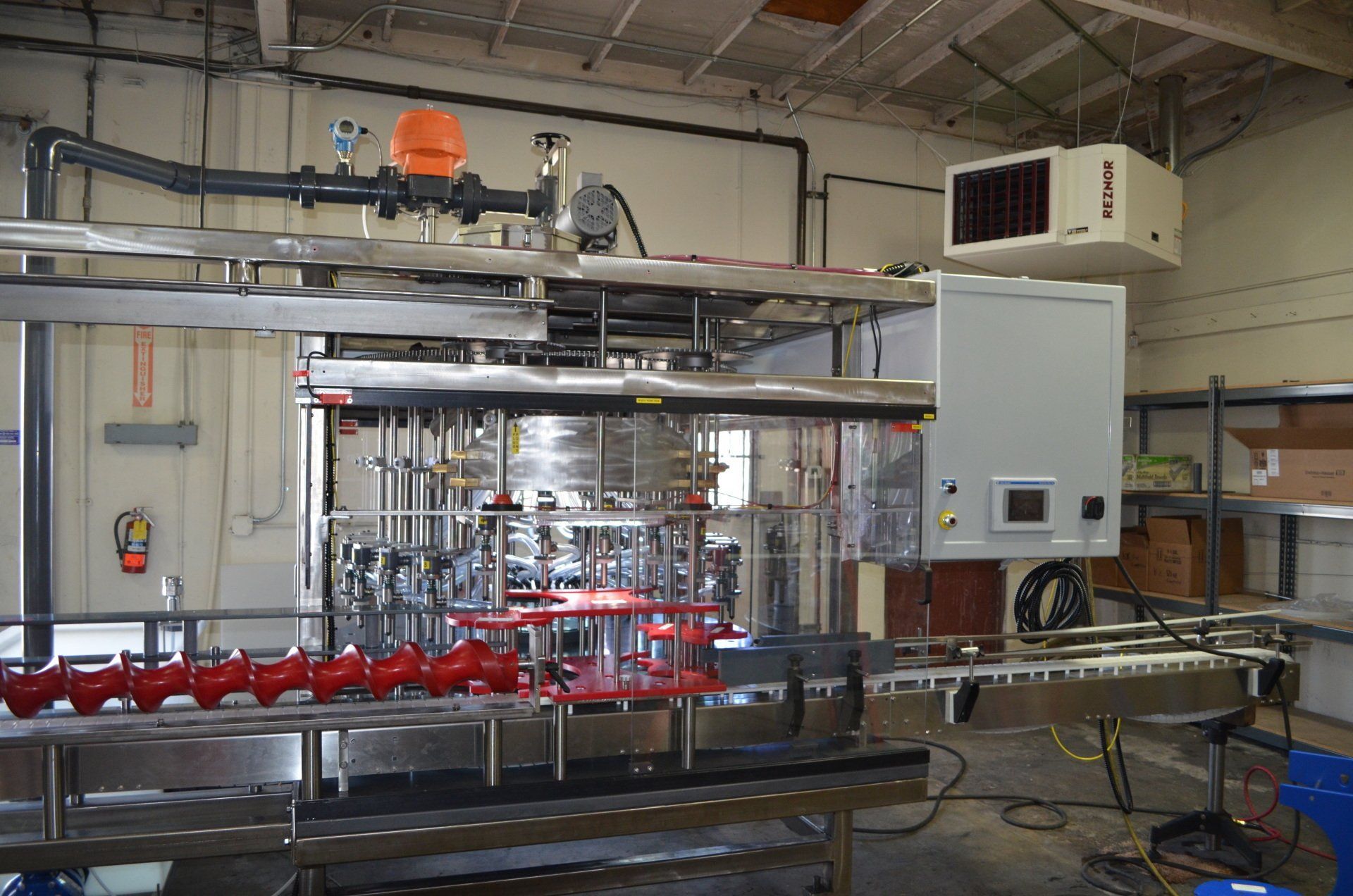
Laub/Hunt Packaging Systems builds a liquid filling machine by starting with the product, container, and production target, then engineering the dose-control, sanitary design, and line integration around those requirements.
July 27, 2026
Clean-in-Place Liquid Filling Systems For Modern Packaging Operations – Part 3 Limits and Risks CIP is not automatic proof of cleanliness. If a line is poorly designed, undersized, or run with the wrong chemistry and cycle parameters, residue can remain even though the equipment was “cleaned”. In practice, CIP works best as part of a broader sanitation program that may include inspection, maintenance, and periodic deeper cleaning or passivation where needed. Another risk is overconfidence in automation. Sensors, valves, pumps, and spray devices must be maintained, and cleaning recipes should be validated against the actual soils and products being handled. For corrosive or high-residue products, system materials and seal selection become critical to long-term reliability. Laub\Hunt Packaging Systems Laub\Hunt is well-positioned to address CIP requirements because its filling systems emphasize sanitary design, precision, and line integration. Its machines are designed with CIP product flush systems and sanitary meters. Its complete packaging lines connect filling equipment with surrounding upstream and downstream systems. For customers in bleach, pool/spa, food and beverage, household products, personal care, and industrial chemicals, that combination is important. It means CIP is not treated as an add-on, but as an integral part of the machine architecture and production workflow. In practical terms, that translates into faster changeovers, better product protection, and lower lifecycle cleaning cost. Conclusion CIP liquid filling systems are essential where cleanliness, speed, and repeatability must coexist. Their value comes from integrating sanitary engineering, automated controls, and process-aware machine design into one dependable production platform. For manufacturers evaluating new filling equipment, the key question is not only whether a machine can be cleaned in place, but whether its design allows CIP to be consistently effective in real-world production.  Frequently Asked Questions 1. What is a Clean-in-Place (CIP) liquid filling system? A CIP liquid filling system is designed so product-contact surfaces can be cleaned internally without fully disassembling the equipment. This helps manufacturers clean filling lines faster, more consistently, and with less manual labor. 2. Why is CIP important in liquid filling operations? CIP helps reduce downtime, improve sanitation, and support product consistency between batches. It is especially valuable in industries where contamination control and frequent changeovers matter. 3. Which industries benefit most from CIP filling equipment? CIP filling systems are commonly used in food and beverage, personal care, household products, industrial chemicals, bleach, and pool/spa products. These industries often require reliable cleaning and repeatable production. 4. How does CIP work in a liquid filler? A CIP process typically circulates cleaning solution, rinse water, and sometimes sanitizing agents through the filler and associated piping. The system uses controlled flow, time, temperature, and chemical concentration to remove residue. 5. What are the main advantages of CIP over manual cleaning? CIP can save time, reduce labor, improve cleaning repeatability, and minimize equipment disassembly. It also helps lower the risk of human error during sanitation. 6. What equipment features support effective CIP cleaning? Good CIP-ready systems often include sanitary product paths, flushable components, proper drainage, compatible seals, and automated valves or controls. The overall machine design is just as important as the cleaning cycle itself. 7. Can CIP systems handle different product viscosities and formulations? Yes, but the system must be designed for the specific application. Thick, sticky, corrosive, or residue-prone products may require different flow rates, spray coverage, and cleaning recipes. 8. How do I know if my current filling line is CIP compatible? You should look at the machine’s product-contact design, drainability, valve arrangement, seals, and control system. A CIP-compatible line should allow cleaning solution to reach all internal contact surfaces effectively. 9. What are the most common CIP mistakes? Common problems include insufficient flow, poor spray coverage, incompatible chemicals, dead legs in piping, and skipping validation. Even a CIP system can underperform if it is not properly designed and maintained. 10. How does CIP support productivity on a packaging line? CIP shortens sanitation time, helps speed up changeovers, and keeps equipment available for production longer. For manufacturers running multiple products, that can translate into better throughput and lower operating costs. Contact us for more information and take a look at parts 1 and 2 of this series .